Tuesday, September 10, 2013

Syria, America and Putin's Bluff

In recent weeks George Friedman written about U.S. President Barack Obama's bluff on Syria and the tightrope he is now walking on military intervention. There is another bluff going on that has to be understood, this one from Russian President Vladimir Putin.

By George Friedman
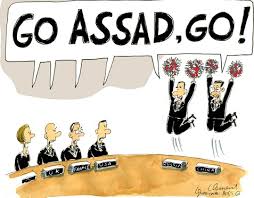


Putin is bluffing that Russia has emerged as a major world power. In reality, Russia is merely a regional power, but mainly because its periphery is in shambles. He has tried to project a strength that that he doesn't have, and he has done it well. For him, Syria poses a problem because the United States is about to call his bluff, and he is not holding strong cards. To understand his game we need to start with the recent G-20 meeting in St. Petersburg, Russia.

Putin and Obama held a 20-minute meeting there that appeared to be cold and inconclusive. The United States seems to be committed to some undefined military action in Syria, and the Russians are vehemently opposed. The tensions showcased at the G-20 between Washington and Moscow rekindled memories of the Cold War, a time when Russia was a global power. And that is precisely the mood Putin wanted to create. That's where Putin's bluff begins.

A Humbled Global Power

The United States and Russia have had tense relations for quite a while. Early in the Obama administration, then-Secretary of State Hillary Clinton showed up in Moscow carrying a box with a red button, calling it the reset button. She said that it was meant to symbolize the desire for restarting U.S.-Russian relations. The gesture had little impact, and relations have deteriorated since then. With China focused on its domestic issues and with Europe in disarray, the United States and Russia are the two major -- if not comparable -- global players, and the deterioration in relations can be significant. We need to understand what is going on here before we think about Syria.

Twenty years ago, the United States had little interest in relations with Russia, and certainly not with resetting them. The Soviet Union had collapsed, the Russian Federation was in ruins and it was not taken seriously by the United States -- or anywhere else for that matter. The Russians recall this period with bitterness. In their view, under the guise of teaching the Russians how to create a constitutional democracy and fostering human rights, the United States and Europe had engaged in exploitative business practices and supported non-governmental organizations that wanted to destabilize Russia.

The breaking point came during the Kosovo crisis. Slobodan Milosevic, leader of what was left of Yugoslavia, was a Russian ally. Russia had a historic relationship with Serbia, and it did not want to see Serbia dismembered, with Kosovo made independent.

There were three reasons for this. First, the Russians denied that there was a massacre of Albanians in Kosovo. There had been a massacre by Serbians in Bosnia; the evidence of a massacre in Kosovo was not clear and is still far from clear. Second, the Russians did not want European borders to change. There had been a general agreement that forced changes in borders should not happen in Europe, given its history, and the Russians were concerned that restive parts of the Russian Federation, from Chechnya to Karelia to Pacific Russia, might use the forced separation of Serbia and Kosovo as a precedent for dismembering Russia. In fact, they suspected that was the point of Kosovo. Third, and most important, they felt that an attack without U.N. approval and without Russian support should not be undertaken both under international law and out of respect for Russia.

President Bill Clinton and some NATO allies went to war nevertheless. After two months of airstrikes that achieved little, they reached out to the Russians to help settle the conflict. The Russian emissary reached an agreement that accepted the informal separation of Kosovo from Serbia but would deploy Russian peacekeepers along with the U.S. and European ones, their mission being to protect the Serbians in Kosovo. The cease-fire was called, but the part about Russian peacekeepers was never fully implemented.

Russia felt it deserved more deference on Kosovo, but it couldn't have expected much more given its weak geopolitical position at the time. However, the incident served as a catalyst for Russia's leadership to try to halt the country's decline and regain its respect. Kosovo was one of the many reasons that Vladimir Putin became president, and with him, the full power of the intelligence services he rose from were restored to their former pre-eminence.

Western Encroachment

The United States has supported, financially and otherwise, the proliferation of human rights groups in the former Soviet Union. When many former Soviet countries experienced revolutions in the 1990s that created governments that were somewhat more democratic but certainly more pro-Western and pro-American, Russia saw the West closing in. The turning point came in Ukraine, where the Orange Revolution generated what seemed to Putin a pro-Western government in 2004. Ukraine was the one country that, if it joined NATO, would make Russia indefensible and would control many of its pipelines to Europe.

In Putin's view, the non-governmental organizations helped engineer this, and he claimed that U.S. and British intelligence services funded those organizations. To Putin, the actions in Ukraine indicated that the United States in particular was committed to extending the collapse of the Soviet Union to a collapse of the Russian Federation. Kosovo was an insult from his point of view. The Orange Revolution was an attack on basic Russian interests.

Putin began a process of suppressing all dissent in Russia, both from foreign-supported non-governmental organizations and from purely domestic groups. He saw Russia as under attack, and he saw these groups as subversive organizations. There was an argument to be made for this. But the truth was that Russia was returning to its historical roots as an authoritarian government, with the state controlling the direction of the economy and where dissent is treated as if it were meant to destroy the state. Even though much of this reaction could be understood given the failures and disasters since 1991, it created a conflict with the United States. The United States kept pressing on the human rights issue, and the Russians became more repressive in response.

Then came the second act of Kosovo. In 2008, the Europeans decided to make Kosovo fully independent. The Russians asked that this not happen and said that the change had little practical meaning anyway. From the Russian point of view, there was no reason to taunt Russia with this action. The Europeans were indifferent.

The Russians found an opportunity to respond to the slight later that year in Georgia. Precisely how the Russo-Georgian war began is another story, but it resulted in Russian tanks entering a U.S. client state, defeating its army and remaining there until they were ready to leave. With the Americans bogged down in Iraq and Afghanistan, no intervention was possible. The Russians took this as an opportunity to deliver two messages to Kiev and other former Soviet states. First, Russia, conventional wisdom aside, could and would use military power when it chose. Second, he invited Ukraine and other countries to consider what an American guarantee meant.

U.S.-Russian relations never really recovered. From the U.S. point of view, the Russo-Georgia war was naked aggression. From the Russian point of view, it was simply the Russian version of Kosovo, in fact gentler in that it left Georgia proper intact. The United States became more cautious in funding non-governmental organizations. The Russians became more repressive by the year in their treatment of dissident groups.

Since 2008, Putin has attempted to create a sense that Russia has returned to its former historic power. It maintains global relations with left-wing powers such as Venezuela, Ecuador, Bolivia and Cuba. Of course, technically Russia is not left wing, and if it is, it is a weird leftism given its numerous oligarchs who still prosper. And in fact there is little that Russia can do for any of those countries, beyond promising energy investments and weapon transfers that only occasionally materialize. Still, it gives Russia a sense of global power.

In fact, Russia remains a shadow of what the Soviet Union was. Its economy is heavily focused on energy exports and depends on high prices it cannot control. Outside Moscow and St. Petersburg, life remains hard and life expectancy short. Militarily, it cannot possibly match the United States. But at this moment in history, with the United States withdrawing from deep involvement in the Muslim world, and with the Europeans in institutional disarray, it exerts a level of power in excess of its real capacity. The Russians have been playing their own bluff, and this bluff helps domestically by creating a sense that, despite its problems, Russia has returned to greatness.

In this game, taking on and besting the United States at something, regardless of its importance, is critical. The Snowden matter was perfect for the Russians. Whether they were involved in the Snowden affair from the beginning or entered later is unimportant. It has created two important impressions. The first is that Russia is still capable of wounding the United States -- a view held among those who believe the Russians set the affair in motion, and a view quietly and informally encouraged by those who saw this as a Russian intelligence coup even though they publicly and heartily denied it.

The second impression was that the United States was being hypocritical. The United States had often accused the Russians of violating human rights, but with Snowden, the Russians were in a position where they protected the man who had revealed what many saw as a massive violation of human rights. It humiliated the Americans in terms of their own lax security and furthermore weakened the ability of the United States to reproach Russia for human rights violations. 

Obama was furious with Russia's involvement in the Snowden case and canceled a summit with Putin. But now that the United States is considering a strike on the Syrian regime following its suspected use of chemical weapons, Washington may be in a position to deal a setback to a Russia client state, and by extension, Moscow itself.

The Syria Question

The al Assad regime's relations with Russia go back to 1970, when Hafez al Assad, current President Bashar al Assad's father, staged a coup and aligned Syria with the Soviet Union. In the illusion of global power that Putin needs to create, the fall of al Assad would undermine his strategy tremendously unless the United States was drawn into yet another prolonged and expensive conflict in the Middle East. In the past, the U.S. distraction with Iraq and Afghanistan served Russia's interests. But the United States is not very likely to get as deeply involved in Syria as it did in those countries. Obama might bring down the regime and create a Sunni government of unknown beliefs, or he may opt for a casual cruise missile attack. But this will not turn into Iraq unless Obama loses control completely.

This could cause Russia to suffer a humiliation similar to the one it dealt the United States in 2008 with Georgia. The United States will demonstrate that Russia's concerns are of no account and that Russia has no counters if and when the United States decides to act.

The impact inside Russia will be interesting. There is some evidence of weakness in Putin's position. His greatest strength has been to create the illusion of Russia as an emerging global power. This will deal that a blow, and how it resonates through the Russian system is unclear. But in any event, it could change the view of Russia being on the offensive and the United States being on the defensive.

Putin made this a core issue for him. I don't think he expected the Europeans to take the position that al Assad had used chemical weapons. He thought he had more pull than that. He didn't. The Europeans may not fly missions but they are not in a position to morally condemn those who do. That means that Putin's bluff is in danger.

History will not turn on this event, and Putin's future, let alone Russia's, does not depend on his ability to protect Russia's Syrian ally. Syria just isn't that important. There are many reasons that the United States might not wish to engage in Syria. But if we are to understand the U.S.-Russian crisis over Syria, it makes sense to consider the crisis within in the arc of recent history from Kosovo in 1999 to Georgia in 2008 to where we are today.

-This article was published by Stratfor Global Intelligence on 10/09/2013
- The writer is the president of Stratfor Global Intelligence

Friday, September 6, 2013

Pick Your Poison : America Has Many Options in Syria, None are Good


The United States is about to go to war in Syria. So perhaps it's a good time to ask the question: Do we really know what we're getting into?


The reason that U.S. President Barack Obama passed the buck on authorizing a military strike on Syria to Congress is not because getting congressional approval is the constitutional thing to do. It always has been, although presidents have regularly denied it. Rather, Obama passed the buck to Congress because it was the only way out of the dilemma that he imposed on himself when he declared the use of chemical weapons to be a red line, without having thought through whether or how to go to war if the line was crossed.

When the red line was crossed, the administration’s belated search for military options faced two contradictions. The first was between the strong incentives to retaliate against the government of Bashar al-Assad and the wide opposition in both the United States and outside world to U.S. military action. The second was between the amount of force that would have a chance of producing useful strategic results and the amount that is politically tolerable. Even among those who demand action, pressure to use U.S. military power is exceeded by pressure not to use very much of it, for fear of entanglement that clearly does mean war.

A responsible choice for Congress and the president must at least be one that does not make things worse. All things considered, that could mean backing away from the threat of action so clearly implied by Obama weeks ago, even though that would be an embarrassing retreat. By accepting the embarrassment, those members of Congress who vote against authorizing the use of force can resolve the two contradictions. But those members who choose to back the president must also, in effect, endorse the intent to use modest amounts of force. That endorsement should, in principle, rest on a sober comparison of what all the potential strategies, including those already rejected out of hand, can be expected to accomplish at an acceptable price. What any strategy can do depends on the fit between political objectives and military operations designed to achieve them.

Logically, there are at least six potential objectives, some of which overlap. These include a symbolic statement against war crimes; punishment of the Assad regime for its crimes; coercion of the regime to change its policy; ending the war, eventually, by helping to defeat Assad; demonstrating credibility to foreign audiences; and demonstrating credibility to domestic audiences. And assuming that the United States has no intention of marching into Damascus, the operation’s half of the equation rests on precisely how limited the air strikes will be. “Limited” air action can range from a few symbolic strikes with minor material impact to a seriously destructive campaign against dozens of targets over the course of several weeks.

Obama made clear before passing the ball to Congress that attacks near the mild end of the spectrum would be the only ones he would countenance. In truth, American air strikes on any scale may not serve some of these objectives. But the most limited attacks are likely to be the least effective for any of the six objectives except the first and the last -- which are the least strategically valid ones. Indeed, the lightest strikes could prove not just ineffective for the most important purposes but counterproductive.

Symbolic use of force can be accomplished with very small-scale strikes. They register stern disapproval of the enemy’s atrocities, and may also serve the last of the six objectives, pre-empting domestic critics waiting to berate the Obama administration for complete fecklessness. Strategically, however, they achieve nothing positive in a brutal war where the contestants are used to paying high costs every day. Pinprick strikes actually signal a lack of serious purpose, and weathering them is a badge of honor for a weak regime confronting a superpower.

Punishment, pure and simple, is the most obvious rationale for retaliation. Assad can be made to pay a price for crossing Obama’s red line, even if the retaliation accomplishes nothing more. There is something to be said for making the point that, even if governments can survive after committing war crimes despite U.S. warnings, they cannot do it for free. That may help to deter third parties in future conflicts. But to make punishment impressive means inflicting damage that is severe. Even if the operation is stronger than pinprick action, destruction from American bombs will appear ineffective if the regime can absorb it as easily as the damage that has accumulated from day to day throughout the war. The more dramatic the price that the United States exacts in the form of damage, the better its strategic point is made.
Coercion -- to deter Assad from further use of chemicals, or to compel him to make political concessions -- would apply punishment toward a more ambitious and difficult goal. Some theorists have argued that restrained use of force can be effective at signaling to a targeted government that it stands to lose much more from subsequent escalation if it does not concede. That idea makes some logical sense, but it has not been borne out in many actual wartime cases, if any, as research by Robert Pape, professor of politics at the University of Chicago, and others has shown. In any case, this strategy depends on intent to up the ante with stronger force if restrained attacks don’t get the desired result.

The closest thing to an example of successful coercion by air attack alone was the war over Kosovo, but that was a massive 78-day assault (surely the outer limits of the concept of “limited”), and it inflicted a huge amount of destruction on Serbia and its civilian population. It proved vastly more costly to NATO than world leaders anticipated at the outset -- they planned no more than a few days of bombing. Finally, there is yet much uncertainty over whether Serbia’s surrender was due to the air war or to other causes, such as the prospect of invasion on the ground or withdrawal of Russian diplomatic support. In any case, the Obama administration has made clear that it does not intend to bomb on the scale of the Kosovo war.

Historical evidence suggests that trying to coerce the Assad regime to make concessions to the rebels would be a long shot, and that, for it to have any chance, it would require a bombing campaign more intense and prolonged than contemplated. And what if only the more modest purpose is declared -- to deter Assad from further use of chemical weapons -- but the regime nevertheless does it again? That would box the president into a choice between embarrassing failure and open-ended escalation, and it would raise messy questions about what an initial congressional authorization meant for that new choice, which would place Obama and Congress in a more terrible bind than they faced at the outset.

Ending the war -- by adding enough U.S. power to the equation to enable rebels to eventually defeat Assad -- is the most ambitious possible objective. It could also be the most legitimate, since, rather than the indecisive and ambiguous psychological effects from a modest attack, it would offer a clear material benefit to justify American action that kills people -- which, make no mistake, is what the use of military force is about. Although it may be the most legitimate objective for an act of war, however, it is the least plausible for Syria. First, there is no constituency in the United States anywhere on the political spectrum for action that is seen clearly as going to war, and there has been no apparent consideration within he administration of an option for limited action that is intense, prolonged, and decisive. Second, even a massive air assault would not be guaranteed to defeat Assad. Third, and most problematic for all of American options toward Syria, there is no reason to believe that a military campaign that worked would produce a good result -- that it would be good pro-Western rebels who take power, rather than bad Islamist radicals even worse than Assad. Thus, the administration has already made clear that the aim of American force in this case is not regime change. But then one might ask the proponents of air strikes: If not to help end the war by either coercion or outright victory, are the other objectives a good enough warrant for using indecisive force that kills people?

Foreign credibility as a concern assumes that other governments will not take American deterrent threats seriously if they see Washington back down from one. This concern overlaps with the rationale for punishment as an objective. Research on previous cases by Daryl Press, a professor at Dartmouth, however, has shown that concerns about credibility are overblown. Nevertheless, it will not be a good lesson for reckless regimes if Obama fails to follow through on a deterrent threat. Since Iran and especially North Korea are more potentially dangerous than Syria, this is not a minor concern. Affirming credibility in the eyes of hardened dictators, however, most probably follows from success in achieving some significant strategic objective. Punitive attacks that appear paltry, indecisive, and bearable will not convince third parties that you can’t get away with crossing Uncle Sam at an acceptable price.

Domestic credibility is a dubious justification for bombing another country, but it inevitably looms large for politicians in a democracy. Despite fervent demands from some, like Senator John McCain, however, Obama’s bow to Congress reflects the strength of opposition to combat action. Obama is damned if he does and damned if he doesn’t. As is usual in politics, compromise between conflicting demands may seem the path of least resistance. Light and brief air strikes are attractive because they do something to undercut hawkish critics, and they alarm dovish critics less than stronger action. But practical political compromise does not always make sensible strategy. As the greatest philosopher of war Carl von Clausewitz wrote, “A short jump is certainly easier than a long one: but no one wanting to get across a wide ditch would begin by jumping half-way.”

As with other post–Cold War atrocities, the use of chemical weapons has led to calls for the United States to “do something” to stop the perpetrators. Yet exactly what that something should be -- which would not make things worse, not cost too much in blood and treasure, and not have unanticipated consequences -- is utterly unclear. The two contradictions make the policy problem a dilemma in the true sense, a choice among unsatisfactory options. Congress must now share responsibility for determining the least bad way out. Indecisive use of military power emerges as the compromise between apparently unacceptable alternatives of doing nothing and doing too much. This is jumping halfway across Clausewitz’s ditch; it is solving Solomon’s choice by actually splitting the baby. In other words, it is politically logical but strategically unwise, and it is both understandable and tragic.

-This article was published first in Foreign Affairs on 05/09/2013. -RICHARD K. BETTS is Director of the Saltzman Institute of War and Peace Studies at Columbia University and an Adjunct Senior Fellow at the Council on Foreign Relations. His most recent book is American Force: Dangers, Delusions, and Dilemmas in National Security.

Wednesday, July 31, 2013

Syria's moderate rebels wane as extremist forces dominate

By Charles Lister
 
 
The most notable trend in Syria in 2013 has been the increasing strategic supremacy of Islamist groups, particularly in the northern half of the country. Every major opposition military victory since September 2012 has been Islamist-led.
 
The success of Islamist groups has damaged the image of the uprising and undermined the West-backed Syrian Military Council (SMC). And the latest claims of clashes between the Free Syrian Army and Al Qaeda's Islamic State of Iraq and the Levant (ISIL) - which dominated the media headlines a little over two weeks ago, though rebel fighters denied the clashes took place - appeared related to this shift in power.
 
The SMC has sought to reverse this shift by appealing for military assistance. So far, the SMC's appeals have resulted in pledges by the United States but no apparent action, making the SMC's leadership in Syria seem increasingly unconvincing. Apparent attempts by SMC commanders to present ISIL militants and their allies as a negative influence on the conflict are almost certainly an attempt to persuade the West of the council's urgent need for increased backing.
 
That the Kurdish People's Protection Units (YPG in Kurdish) felt the need to launch pre-emptive attacks on Islamist forces in the northeastern province of Hasakah on July 17 underlined that Kurds are also aware of the increasing dominance of Islamists in Syria.
 
Today, opposition military forces can be divided into three categories: groups loyal to the SMC, most of whom maintain the FSA brand name; Salafists, whose ranks are dominated by Syrians; and jihadists, who increasingly recruit from across the Islamic world and many of whom have at least sympathy for Al Qaeda.
 
While the first two overlap somewhat, with several large Salafist group leaders present within the SMC, the increasingly questionable extent of their ultimate allegiance to the SMC and their clearly tight coordination with jihadists is seeing their alignment shifting, especially in northern Syria.
 
As such, Salafist groups, notably Harakat Ahrar Al Sham Al Islamiyya, now represent the most strategically powerful players in the conflict and serious rivals to the moderate SMC leadership.
 
The Salafist contingent within Syria's insurgency is dominated by the Syrian Islamic Front (SIF) and the Syrian Islamic Liberation Front (SILF). While the former has taken a hard line in avoiding relations with the SMC, several SILF constituent group leaders are members of the SMC. However, SILF's organisational value as a singly organised and commanded front appears to have eroded in recent months. Moreover, on the ground, major SILF groups have developed increasingly close relations with Harakat Ahrar Al Sham Al Islamiyya, the SIF's pre-eminent force.
 
While the SILF has described itself as "moderately Islamist" and as keen to maintain relations with the FSA, several core members - Suqor Al Sham, Liwa Dawud, Liwa Al Islam and Liwa Al Tawhid, each containing several thousand members - have operated increasingly independently in 2013. Rumours exchanged among Islamist militants in June 2013 went so far as to claim any or all three of Suqor Al Sham, Liwa Dawud and Liwa Al Tawhid could one day join the SIF.
 
In northern Syria, these three groups coordinate on a daily basis with Harakat Ahrar Al Sham Al Islamiyya, which is arguably the most powerful insurgent actor in Syria. It regularly initiates multi-group offensives, consistently including Jabhat Al Nusra and members of SILF, and is unique in having been involved in every major base or military facility capture in Syria since September 2012.
 
In addition to its military capabilities, it operates a "technical division", which has conducted successful cyber attacks on the pro-government Syrian Electronic Army and Addounia TV. The division was likely responsible for designing the group's freely downloadable application for Android mobile phones, released on July 10.
 
On June 8, Harakat Ahrar Al Sham Al Islamiyya leader Hassan Aboud appeared publicly for the first time - revealing his real name and identity - in an interview on Al Jazeera. Over the next week, he gave a keynote speech at a conference of the International Union of Islamic Scholars in Cairo and an interview on Egypt's Salafist Al Nas TV.
 
This rapid move into the public eye, on a regional level, suggested Mr Aboud and the SIF were being presented, with the backing of external actors, as a viable Salafist alternative to the existing moderate SMC-led opposition.
 
After Mr Aboud's public appearances, his group's militants launched several new offensives and the technical division began operations. Crucially, Harakat Ahrar Al Sham Al Islamiyya has demonstrated competence in governance within areas under its control, running extensive networks of food, water and fuel provision across northern Syria. It even operates the eastern province of Raqqah's largest water pumping station, several dams and a road and bridge repair company. The group also provides free Islamic education to children in Idlib, Aleppo and Hama.
 
Since the fall of Qusayr in Homs on June 5, the Syrian military has led successful offensives in Homs and in northern Damascus, placing increasing pressure on areas controlled largely by FSA-branded and SMC-linked groups. As such, the moderate opposition has come under increasing strain while northern Syria remains dominated by Salafists and jihadists and faces a lesser level of military pressure. The Salafists also appear to be benefiting from higher levels of backing from regional, Gulf-based states and individuals.
 
There is a power shift underway within the Syrian insurgency and it is not one that will be welcomed in western government circles.
 
- this commentary was published in The National on 31/07/2013
-Charles Lister is an analyst at IHS Jane's Terrorism and Insurgency Centre, London UK. An expanded version of this article was first published in IHS Jane's Islamic Affairs Analyst
 

Friday, June 7, 2013

Syria Is Now Saudi Arabia's Problem

The battle for a town on the Lebanese border marks the kingdom's first attempt to lead Syria's fractured opposition.

BY HASSAN HASSAN


Hezbollah can finally claim a victory in Syria. The town of Qusayr, adjacent to the Lebanese border, has fallen to the Lebanese militia after nearly a month of fierce battles with Syrian rebels. Dozens of Hezbollah's fighters have been killed, despite air cover and ground support from Bashar al-Assad's regime.

The Qusayr battle has been constantly, and wrongly, described as a turning point in the Syrian war. Why has this small town of some 30,000 residents become "strategic," as it is constantly described in the press, all of a sudden? The town had previously been run by its Sunni residents for more than a year, with little mention of its strategic benefits.

Hezbollah's open military intervention in Syria partly explains the publicity the Qusayr battle has received. As a result, the "Party of God" has lost much of its political and ideological capital in the region -- a capital the militia had painstakingly acquired from its three-decade career of "resisting" Israel.

But beyond the supposed military benefits of Qusayr, the battle for the town carried important consequences for the balance of power within the Syrian opposition. Qusayr is arguably the first battle in Syria to be completely sponsored by Saudi Arabia, marking the kingdom's first foray outside its sphere of influence along the Jordanian border. Riyadh has now taken over Qatar's role as the rebels' primary patron: In one sense, the Saudis can also claim a victory in Qusayr, as they have successfully put various rebel forces under the command of their ally in the Free Syrian Army (FSA), Chief of Staff Gen. Salim Idriss.

Although the Syrian rebels received military aid from various countries and private donors, Qatar initially emerged as the main sponsor of the opposition. Its alliance with Syria's Muslim Brotherhood helped it control the political opposition and the armed rebels' most prominent factions, including Liwa al-Tawhid in Aleppo.

But under increased pressure from the Untied States, Qatar has recently handed over the "Syrian dossier" to Saudi Arabia. Members of the Syrian opposition coalition made a two-day visit last month to Riyadh for the first time to coordinate with the Saudis. The opposition's delegates were asked by Riyadh to restructure the Syrian National Coalition, the umbrella group for the opposition, which they bitterly did three weeks later.

In response, Saudi Arabia has stepped up its aid. Riyadh provided the rebels with 35 tons of weapons, though the kingdom failed to provide them with the better-quality arms the FSA's chief of staff had requested. Significantly, Liwa al-Tawhid joined the battles in Qusayr -- a significant step, because the militia had always worked closely, and almost exclusively, with the Qataris and the Brotherhood. According to Gulf sources close to the Syrian opposition, Liwa al-Tawhid's commander, Abdulqader al-Saleh, has recently met with representatives of Saudi intelligence to coordinate military activities. Rebel fighters from Aleppo's Military Council and from the eastern province of Deir Ezzor also joined the battles.

The kingdom's clients have been making progress on the political level as well: Idriss has recently acquired wide-ranging powers within the Syrian National Coalition. Sources familiar with the opposition's talks in Istanbul last month told me the general was given a veto over the 14 provincial representatives from Syria's provinces, in addition to the 15 seats given to the Free Syrian Army. These combined 29 seats -- added to the eight seats given to the opposition figure Michel Kilo and 13 to the Democratic List, an alliance essentially backed by Riyadh -- significantly expanded Saudi Arabia's influence on the coalition and undermined the previous dominance of the Brotherhood.

The opposition's talks in Istanbul lasted for more than a week, and the coalition's Brotherhood-dominated General Assembly first refused to accept the expansion plan, despite ferocious pressure from Western ambassadors and representatives from the Gulf states. But according to Gulf sources, the coalition members were given an ultimatum a day before they finally accepted the expansion plan -- either accept it or Idriss would announce the creation of an FSA political wing that would supersede the coalition altogether. The General Assembly members backed down and accepted an even worse deal than what had initially been proposed.

To be sure, the Saudis could not have bolstered their leverage within the opposition without help from countries like the United States and Jordan. Riyadh works closely with almost all the players in the Syrian conflict, barring Qatar and Turkey. Contrary to popular belief, the kingdom supports moderate groups within the Syrian rebels to counter the influence of the Brotherhood and its Qatari patrons. As a result, Saudi Arabia's increased influence may help temper some of the rising fears of extremist trends within the armed opposition. Of course, the kingdom also supports Salafi-leaning groups to counter jihadi groups such as the al Qaeda affiliate Jabhat al-Nusra.

Washington has recently stepped up financial monitoring efforts to ensure that any aid to the Syrian rebels goes through Idriss, according to informed sources from the Gulf. These measures will of course be difficult to enforce, owing to the activities of private donors with established channels with the Syrian rebels -- and also due to the poorly regulated financial institutions of some countries, such as Kuwait. But they nevertheless mark an attempt to empower Idriss, and consequently the Saudis.

Nonetheless, Qatar can still pull a few strings within the opposition. A Syrian activist told me that Turkey-based representatives from Qatar had declined to meet a rebel group from Idlib a week before the opposition's talks in Istanbul. But after the expansion of the coalition, the representatives called the group back and apparently provided it with the ammunition it needed. Doha's influence may have decreased, but it can still use its established channels to maintain leverage over armed groups.

As it consolidates its takeover of the opposition, another factor that favors the Saudis is its tentative rapprochement with the Syrian Muslim Brotherhood. Saudi Foreign Minister Saud al-Faisal met last month with the Brotherhood's deputy leader, Mohammed Tayfour, for the first time. The Brotherhood had requested the meeting to mend its relations with the kingdom, which had shunned the group and stated privately on more than one occasion that it rejects the Brotherhood's dominance of Syria. The meeting was not an indication that the kingdom has opened it heart to the Brotherhood, as some have argued, but was meant to contain the group as Riyadh takes over from Qatar.

Still, the Saudis currently have little leeway to exercise their newfound influence. Washington and Moscow are still intent on organizing a "Geneva 2" conference, intended to bring together representatives from the Syrian regime and the opposition to reach a negotiated settlement. The preparations for Geneva 2 have meant that military options, such as increased aid for the rebels, are on pause until the talks take place or fail.

Meanwhile, Hezbollah's victory in Qusayr was inevitable, but not the end of the story. Saudi Arabia's sponsorship of the battles in this formerly obscure town marks a new beginning of warfare in Syria -- one many hope will add a sense of unity to rebel ranks and empower moderate opposition forces.

-This commentary was published in Foreign Policy on 06/06/2013

Wednesday, June 5, 2013

The Rise Of Shia Jihadism In Syria Will Fuel Sectarian Fires

By Hassan Hassan


Amid Syria's worsening crisis, there is another unprecedented, yet overlooked phenomenon that bodes ill for the entire region: the rise of global Shia jihadism. The number of foreign Shia jihadists in Syria is arguably greater than Sunni ones. So what will this new trend mean?

To be sure, foreign jihadists on both sides are destroying Syria. But the rise of Shia jihadis is adding a toxic mix to the already combustible sectarian tensions.

Shia and Sunni differ on the concept of jihad. According to both Sunni and western scholarship, jihad in Shia theology is seen as of a lesser priority. Some claim that Shia theology emphasises the suspension of jihad until the emergence of the Hidden Imam, a reading disputed by Shia scholars. In any case, Shia's armed activism has historically been limited to a person's immediate geography.

But that has changed dramatically during the Syrian uprising. While the trend is rooted in the US invasion of Iraq in 2003, and more loosely in the Islamic revolution in Iran, now, for the first time in the history of Shia Islam, adherents are seeping into another country to fight in a holy war to defend their doctrine.

Aaron Y Zelin, an expert on jihadi groups at the Washington Institute for Near East Policy, a US think tank, estimates that between 2,500 and 7,000 foreign Sunni fighters have participated in the conflict - some 500 to 600 of them have died, returned home or been arrested. Conservative estimates for Shia fighters put their numbers at double that of Sunni jihadi fighters.

Shia jihadism - fighting a holy war in the name of religion to expand territorially or defend co-religionists - has hitherto been almost unheard of. Additionally, the fact that the new phenomenon conveys pan-Shia sentiments distinguishes it from previous trends. Hizbollah's ideology cannot be considered jihad and is rather one that defines a sectarian militant party.

The phenomenon, which had been largely peculiar to Sunnis, marks a shift in Shia theology akin to the idea of vilayat e faghih - advanced by the founder of Iran's modern Islamist state, Ayatollah Ruhollah Khomeini, who argued that a cleric can legitimately rule the Muslim community (unlike previously when that task was left till the coming of the Hidden Imam).

Ayatollah Khomeini advanced a novel idea that gave rise to active political Shiism. Similarly, the flow of Shia jihadists into Syria and the rhetoric behind it will change Shia Islam as we know it.

One only needs to consider how Sunni jihadism came to life after the Afghanistan war against the Soviets in the 1978s to conclude that the idea of exported Shia jihadism is here to stay. And we are likely to see it developing to engulf the region if the factors behind its rise are not addressed.

In Syria, this trend has been in the making since the early days of the anti-regime uprising. Videos emerged from the conflict showing Alawite militia leaders portraying the conflict as a cosmic war between Shia and Sunni, one that dates back to the 7th century. One Alawite militia leader said that the "battles you are fighting now are 1,400 years old" and "you are fighting on the side of Imam" Hussain, the grandson of the Prophet who was killed by the Umayyads' army, based in Damascus.

In Damascus the shrine of Sayyida Zainab, Hussain's sister, has been used as a recruitment tool. Shia fighters have come from Iraq, Yemen, Iran and Lebanon to defend the shrine from being attacked. Hizbollah's involvement has also been incremental, first by claiming it was defending Lebanese Shia villages, then defending Shia villages on the Syrian side of the border, and then by announcing recently it is fighting on the side of the regime. Hizbollah has described the death of its fighters as "martyrs [who died] while performing jihadi duties".

The fear is that the incremental escalation will potentially include, as some informed sources say, the demolition of holy shrines to galvanise reluctant Shia fighters. Religious sentiments among Shia are steadily building and, with time, these sentiments may be entrenched. The symbolism of the Zainab shrine, for example, is increasingly becoming an esoteric concept that does not need to be expounded.

Syria is significant in the conscience of both Shia and Sunni adherents. It is the land of the Umayyads, which can invoke memories of victory and defeat and images of the persecution of the Prophet's family. For Sunnis, Syria is associated with sayings of the Prophet suggesting it is a blessed land. Syria is also the land of resurrection of the saviour.

And yet, politics plays an instrumental role in stoking these tensions. There is a deep distrust between Shia and Sunni, with each side labelling the other as the "near enemy" for "stabbing Islam in the back". Politicians exploit these sentiments to divert attention from being themselves labelled as the near enemy, an idea adopted by many Salafi-jihadists.

Influential clerics who spew sectarian venom, like Egypt's Youssef Qardawi and Syria's Adnan Arour, should be stopped before it is too late. These clerics and their backers are playing with fire. Also, Arab states that disenfranchise their Shia citizens must take measures to prevent them from drifting towards the extreme.

Politicians who see the rising sectarian tensions and violent ideologies as politically expedient will find that these trends cannot be contained or managed.

-This commentary was published in the National on 05/06/2013

Wednesday, April 3, 2013

Why Obama Failed In The Middle East


From the Arab Spring, to Syria, to Iran, to the peace process, President Barack Obama's actions have yet to live up to his high-flying rhetoric.

BY AARON DAVID MILLER


It is the cruelest of ironies that President Barack Obama's legacy in the Middle East -- a signature issue for many U.S. presidents -- now lies in the hands of two of his most intractable adversaries: Syrian President Bashar al-Assad and Iranian Supreme Leader Ali Khamenei. It also probably doesn't make him sleep any easier that the third major player is a man with whom he has a famously dysfunctional relationship: Israel's Benjamin Netanyahu.

It's cruel because saving Syria, resolving the Iranian nuclear issue, and achieving Israeli-Palestinian peace seem well beyond the president's capacity -- even if he boasted the support of willing and trusting partners. And it's ironic because Obama set out not to preside over catastrophes in the Middle East but to transform the region for the better. He now risks being the president on whose watch it all became so much worse.
Is this unhappy tale primarily Obama's fault? No. But on the four key issues that will likely define the president's legacy in this region, his critics have already reached a very different conclusion -- and history may too.
A regional order transformed

It was both Obama's luck and misfortune to have been president during a historic, once-in-a-century transformation of the Middle East. You don't get to be a doer of great deeds unless you're confronted with great events and are then able to help shape them (see: Lincoln, FDR).
Obama was lucky enough to have the first, but he couldn't -- his critics allege -- produce the second. Unlike the period from 1986 to 1992, when Ronald Reagan and George H.W. Bush were perceived as proactive players in shaping events after the crumbling of the Soviet Union, Obama may be seen as more the bystander.
The comparisons to the end of the Cold War are perhaps a bit unfair. The president was indeed on the right side of history in the early acts of the Arab Spring: He recognized the inevitability of the end of America's authoritarian friends in Tunisia, Egypt, and Yemen -- and to his credit, he was proactive in helping get rid of Libyan autocrat Muammar al-Qaddafi.
But subsequent inattention in Libya and the Benghazi debacle, Obama's vacillation about how to deal with Egyptian President Mohamed Morsy and the Muslim Brotherhood, a hesitancy to speak out more forcefully against the Brothers' exclusivist and arbitrary policies in Egypt, and acquiescence to Saudi-backed repression in Bahrain raised doubts about whether he had indeed moved to the right side of history.
Yet the "who lost the Middle East?" debate is really a silly one -- the region was never Obama's to lose. America cannot dictate the course of events there, even if it wanted to. It was, after all, Arabs' ownership of their own politics that gave the Arab Spring its authenticity and legitimacy.
But the strange marriage of neocons and liberal interventionists has hammered home the theme that the president has lacked vision, leadership, and strength in responding to these historic transformations. Where was the appointment of the "super envoy" to oversee America's strategy toward the Arab Spring, the task forces to monitor regional developments around the clock, and the strategic use of incentives and disincentives to reinforce positive change and lay down markers in the face of negative behavior? Or was it all just too much -- too fast and furious to keep track of?
Had the Arab Spring moved in the right direction, Obama would have been hailed as a strategic genius for his smart, low-cost management from the sidelines. Sadly, it has moved the other way -- toward instability, violence, and dashed hopes. As a result, what people saw -- certainly those in the Middle East, where it's easy to blame somebody else for your troubles -- is a president who became strangely disconnected and who at best just seemed to have other things to do. At worst, he seemed to have simply stopped caring.
Syria: Exhibits A to Z

Nowhere is the charge of passivity and abandonment more likely to stick than in Syria.
I've supported the president's risk-averse approach on Syria, largely because the endgame the United States wants -- a liberal, secular, pro-Western Syria -- is beyond America's capacity to achieve from the outside and not worth the risk of a more muscular intervention that would require the United States to be on the inside. Splitting the difference by thinking America can get what it wants by arming this or that rebel group in a sea of competing rebel groups and external actors for which Syria is truly vital is, well, laughable.
History may prove much less sympathetic, however. Syria's isn't Obama's Rwanda. But the killing -- and the passive reaction of the entire international community -- will raise inevitable questions about what more could have been done.
It won't help the president's case that key members of his national security team recommended doing more and he overruled them. It may not be remembered that "more" would barely have altered the military arc of the conflict.
It's lonely at the top. And the president will be criticized on moral, humanitarian, and strategic grounds for not doing more. Plenty of circumstances could still bring America into Syria, particularly the use of chemical weapons on a large scale. But barring some heroic, improbable intervention that brings down the Assads and stabilizes the country, it's hard to see how Obama could create a counternarrative to the judgment history is likely to bestow on him.
Iran
Obama stands to be the U.S. president who either allows Iran to get a nuclear weapon, is the first to bomb the country, or becomes the guy who cuts an interim deal that keeps the mullahs a few years away from nuclear nirvana. That last scenario, by the way, comes with ready-made tensions with Netanyahu, with whom Obama just mended fences. The Israeli prime minister will wonder how a limited tactical deal on enrichment fixes Israel's strategic problem with prospective Iranian nukes. It also offers no real guarantees that the Israelis -- unhappy with a diplomatic outcome -- don't at some point resort to military action on their own. If he's really lucky, he gets out of town before Iran gets the bomb, and then it's the next president's headache.
Not a terribly appetizing menu for the legacy buffet. A military strike could make Obama look strong, but there are those pesky, unpredictable repercussions, including plunging financial markets, skyrocketing oil prices, and escalating regional tensions. A grand bargain in which the mullahs gave up their nuclear weapons ambitions and began to work with the West toward a more stable Middle East would make the president look like a genius. But it's an outcome he's unlikely to see.
The reality is that Iran -- followed by North Korea -- is probably the most difficult puzzle in the international system today. There are no happy endings or comprehensive solutions. And for this president, who has publicly vowed not to allow Iran to develop a nuclear weapon, the ironies abound. Think about this: His predecessor went to war against Iraq, a war Obama strongly opposed, because of imaginary weapons of mass destruction, only to strengthen and embolden an Iran that could cross some significant nuclear threshold on Obama's watch.

Obama's hopes for burnishing his legacy don't improve when it comes to Arab-Israeli peacemaking. Will he become the president on whose watch the two-state solution finally expires?
Here, perhaps, there's more time, leeway, and even some hope to improve the odds of leaving a meaningful legacy behind. Sure, the possibility of a big, conflict-ending accord seems pretty remote, but in between doing nothing and the full monty, there's much to be tried. And Secretary of State John Kerry -- the new, very smart and savvy Energizer Bunny of U.S. diplomacy -- is well suited to the task, if the president gives him the latitude.
Kerry has a lot of options as he attempts to kick-start the peace process. He can try to first define the borders of a provisional Palestinian state. He might try to focus on terms of reference to guide a negotiation. He could even sprinkle in some resonant confidence-builders for both sides and a kind of code of conduct during a negotiating period. And if he's really ambitious, he can see where the gaps are on all the issues, including Jerusalem and refugees, and try for a framework agreement that would garner support in the Arab world by tying it to the 2002 Arab Peace Initiative.
Given the uncertainties in the region and the gaps between the new Israeli government and the Palestinian Authority, I think Obama has no illusions about Israeli-Palestinian peace. That's why he has a Plan B in mind: the legacy initiative. And that's the Obama parameters -- laying out U.S. views on the big issues to define the negotiations. It's not a perfect approach: Kerry, I'm told, wants an actual agreement. If all else fails, however, you can lay out these parameters, and who knows -- with enough effort, maybe you can get one side to embrace them and then try to leverage the other.
But even if you can't, Obama can use them to demonstrate his commitment to the desirability and importance of a two-state solution. This kind of exercise is vintage Obama -- rhetorical, above the details, plenty of thematic altitude with no need for real follow-up. It's not great for U.S. credibility if there are no takers and the Obama initiative is left hanging, but it beats the alternative: a big, fat goose egg from a president who initially set the bar so high.
Might Obama's zero for three-and-a-half legacy be averted? Can't the next several years offer up a different and happier set of endings? Isn't it still possible for Obama to be the president he wanted to be: the transformer, the peacemaker, the visionary leader?
It's hard to see how. The issues in this region are so complex, the mistrust between the parties so deep, the number of moving pieces so many, that it's tough to imagine grand bargains and transformative change brokered by a risk-averse president.
The pull of doing great things that initially inspired Obama will continue to tug. At least when it comes to the Middle East, the president should do everything he can to mightily resist it. Big transformations require that the locals -- in this case, the Iranians, Israelis, and Palestinians -- share real urgency and ownership. Only then can a willful and skillful president exploit that urgency and ownership and turn crisis into opportunity.
Right now, the first isn't evident and the second is a still a thought experiment. Obama ought to think transactions, not transformations: Try a serious effort to broker a deal with the mullahs before going to war, and do the same with Israelis and Palestinians to preserve the possibility of peace. Such interim accords aren't sexy or the stuff of which legacies are made. They won't get Obama into the presidential hall of fame. But they are both desirable and possible.
And if Obama is really lucky, he just might be able to do something that seems pretty consequential right now: leaving this broken, angry, and dysfunctional region a little better than he found it.
-This article was published in Foreign Policy on 03/04/2013-Aaron David Miller is vice president for new initiatives and a distinguished scholar at the Woodrow Wilson International Center for Scholars. His forthcoming book is titled Can America Have Another Great President?. 

Thursday, February 7, 2013

A New Phase In The Struggle For Syria

Extremism among rebels, a fractious opposition and Israel’s machinations threaten to worsen the crisis

By Patrick Seale


While blood-letting in Syria continues on a grand scale, the situation in and around the country is far from static. Three major developments are worth noting, as they are changing the nature of the struggle.

First, the US and its western allies are becoming increasingly alarmed at the rise to prominence in Syria of extremist Al Qaida-backed rebel groups, such as the Nusra Front (Jabhat Al Nusra), which has eclipsed all its rivals in fighting prowess in the field. Washington has put it on a list of foreign terrorist groups.

Indeed, many are beginning to ask what is the point of the US and its allies waging war against Al Qaida across the world — in Afghanistan, Pakistan, Yemen, Somalia and, most recently, in Mali — while giving free rein to it in Syria, thereby no doubt guaranteeing it a major role in any post-Al Assad government.

The spectre of a Taliban-type regime on the doorstep of Europe is causing real concern and explains the increasing reluctance of western countries to arm the rebels.

The current European Union embargo on arms deliveries to Syria is due to expire on March 1. Will it be renewed or will weapons be allowed to flow in? The British and French foreign ministers, William Hague and Laurent Fabius, have been very much in favour of arming the rebels, but they are likely to meet stiff resistance at the next council meeting of European foreign ministers in Brussels on February 18.

The western mood is now far more cautious in dealing with the Syrian crisis.

A second major development is a growing split in the civilian ranks of the Syrian opposition, a fractious body at the best of times. The Turkey-based Syrian National Council (SNC), dominated by the Muslim Brotherhood, has always rejected any negotiation with the Syria regime so long as President Bashar Al Assad remains in power.

Its prime objective is to topple him, but the SNC has proved to be an ineffective body of squabbling exiles, exercising little control over the fighters in the field.

To remedy the situation, Qatar and the US sponsored the creation last November of a new opposition body — the Syrian National Coalition — headed by an apparently moderate Islamist, Muath Al Khatib, who had been the Imam of the Great Ummayid Mosque in Damascus. The old SNC was incorporated in the new coalition as a sort of junior partner.

Al Khatib’s new coalition, however, has not done much better than its predecessor. Its constituent factions have failed to show enough cohesion to allow it to form a credible opposition ‘government’ — and thereby win real financial and political backing from the West, not to speak of weapons.

Such is the background to the political bombshells recently dropped by two opposition figures. Haitham Al Manna, a veteran Paris-based Syrian civil rights activist, has from the start of the uprising in 2011 firmly opposed the rebels’ resort to arms.

When the world’s attention was focused on the fighting, he was ignored. But the military stalemate has contributed to a change of mood, which has allowed Al Manna to re-emerge into public view.

On January 28, he chaired what seems to have been a highly successful meeting of like-minded opposition figures in Geneva. Two days later, on January 30, Al Khatib — perhaps not wishing to be upstaged by Al Manna — dropped his own bombshell by announcing (on his Facebook page) his willingness “to take part in direct talks with representatives of the Syrian regime …”

This dramatic statement was seen as a positive response to Al Assad’s call on January 6 for a major conference of national reconciliation tasked with drawing up a charter outlining how Syria was to be governed in future, the terms of which would then be put to a referendum, followed by elections, the formation of a new government and a general amnesty.

Al Khatib was immediately denounced by opposition hardliners, notably by the Muslim Brothers. He was forced to explain that he had spoken in a purely personal capacity, but it was widely suspected that he was reflecting a growing trend in the opposition which, despairing at the horrendous human and material cost of the conflict, is perhaps almost ready to give dialogue a chance. No doubt, Al Khatib has also grasped that, as there is little hope of western military and financial aid on the massive scale required, it might be time to explore the possibility of a negotiated settlement with the regime.

Needless to say, Israel is watching these developments with very great attention. Indeed, a third major recent development was Israel’s air strike on the night of January 29-30 on Syria’s prime military research establishment, the Scientific Studies Research Centre (SSRC), located at Jamaya, north-west of Damascus. Israel’s alleged motive was to prevent the transfer sophisticated Russian weapons such as advanced radars and anti-aircraft missiles to Hezbollah since this might restrict Israel’s freedom to strike Lebanon at will.

In fact, in mounting this latest attack, Israel’s motives were probably more ambitious. As is well known, it is anxious to bring down the whole so-called ‘resistance axis’ of Iran, Syria and Hezbollah, which in recent years has managed to develop a certain deterrent capability vis-à-vis Israeli power. Israel’s bombardment of Syria’s research establishment was very probably intended to provoke the ‘resistance axis’ into responding with an attack on an Israeli target, which would then have provided Israel with the pretext for an all-out assault.

Israel has a score to settle with Hezbollah, which fought it to a draw when Israel last invaded Lebanon in 2006. Israel is also worried that the five members of the UN Security Council plus Germany (the so-called P5+1) might make progress at their next meeting with Iran, which is due to take place in Kazakhstan on February 25. It is particularly concerned at reports that the US and Iran might engage in a bilateral dialogue, as US vice-president Joe Biden has recently hinted.

None of this is to Israel’s taste. It has for years been urging the US to destroy Iran’s nuclear facilities — and bring down the Islamist regime — in much the same way that pro-Israeli neo-cons, using fraudulent intelligence, pushed the US into invading and destroying Iraq in 2003. Equally, Israel does not want the Syrian opposition to engage in dialogue with the regime and arrive at a peaceful settlement. It wants Syria to be further enfeebled and dismembered, much as Iraq was a decade ago, and from which it has far from recovered.

Much will depend in the coming weeks on the wisdom of US President Barack Obama’s new team and, in particular, on the new secretary of state John Kerry. Will he encourage negotiations to resolve the Syrian crisis peacefully so as to stem the destruction of the country and its people, as well as preventing the further destabilisation of Turkey and Lebanon, or will he play Israel’s traditional game of subverting the region so as to reign supreme?

-This commentary was published in Gulf News on 07/02/2013
-Patrick Seale is a commentator and author of several books on Middle East affairs