Tuesday, July 17, 2012

Five Reasons Why The Two-State Solution Just Won't Die

For Middle East peace, it's the only game in town.

BY AARON DAVID MILLER


By all accounts it's time to say a kaddish -- the traditional Jewish prayer for the dead -- over the idea of a Palestinian state living side by side in peace and security with Israel.
A recent article in the National Interest, running under the cover "Requiem for the Two-State Promise," provides a compelling eulogy and funeral oration all in one. And Stephen Walt, a fellow FP contributor, once again attributing most of the ills of Western civilization to the "Israel lobby," all but buried two states on his blog last week.

To paraphrase Mark Twain, signs of the two-state solution's demise aren't exaggerated.
Israeli settlement activity continues unabated. In fact, in a truly bizarre and tortuous bit of twisted logic, a recent report by a committee created by Prime Minister Benjamin Netanyahu actually recommended sanctioning the Israeli activity.

The Palestinian national movement is deeply divided between Fatah (itself split) and Hamas, the rival ruling parties, and resembles a veritable Noah's ark, with two of everything: mini-states; constitutions, prime ministers, security services; funders, and so on. And the Fatah-controlled Palestinian Authority (PA) is too busy right now trying to decide whether to dig up the remains of a truly dead entity -- Yasir Arafat -- in an effort to figure out the cause of his demise. Meanwhile, back on planet Earth, Israel -- run by the deepest unity government in its history -- is unified around a coalition agreement that ensures a do-nothing approach on this issue for at least the next year.

As for U.S. President Barack Obama, well let's just say he's busy and not interested in getting into a fight with a tough-minded Israeli prime minister over an idea whose time -- to put it mildly -- hasn't yet come.

Still, hope springs virtually eternal. Anyone truly worried about the demise of the two-state solution shouldn't be. It will live on both as an idea and maybe even a reality if Israelis and Palestinians ever get serious about paying the price and seriously negotiating a solution. And here are five reasons why.

1. An Unsustainable Status Quo

Unlike a deal with Syria over the Golan Heights, the absence of an accord with the Palestinians has always carried a real cost and urgency. Just compare the numbers of Israelis and Syrians who have died as a result of their conflict to the number of Israelis and Palestinians killed by one another since 1967 in theirs. There's simply no cost-free status quo between Israel and the Palestinians. Proximity, demography, and geography guarantee it. The two peoples are living on top of one another. Benjamin Franklin had it right: Proximity breeds children, but also contempt. Violence, anger, and frustration will only grow as occupier and occupied play out their roles in close quarters. And this means continuing terror, violence, confrontation, and repression.

That doesn't, of course, mean the Israelis and Palestinians are ready for a deal or that the two-state solution will be achieved. But the search will continue interminably -- sometimes seriously, sometimes not -- like the quest for the Holy Grail, Elvis sightings, and the search for signs of life on other planets.

2. The Least-Bad Option

Democracy is the worst form of government except for all the others, Winston Churchill famously observed. And Churchill knew something about Palestine, too. His logic is relevant. In the solution department -- and, trust me on this one, solution departments in capitals all over the world won't stop trying on Palestine -- two states is by far the least objectionable outcome. Not that it's problem- or risk-free. But the other alternatives -- the one state illusion, the Jordan option, Israel's annexation, and the status quo option -- are much worse. Whether it's just as a talking point or an actual initiative, the two-state paradigm is here to stay.

3. Israeli Politics Demands It

Just because Netanyahu may not be all that interested in a serious negotiation leading to an independent Palestinian state doesn't mean that other Israeli politicians aren't. Indeed, in his own government, the prime minister is surrounded by those who have tried to reach an accord (Defense Minister Ehud Barak) or want to (Deputy Prime Minister Shaul Mofaz). The recent acquittal of Ehud Olmert, a former prime minister who offered much better terms to Palestinian leader Mahmoud Abbas in 2007 and 2008 than Barak did at Camp David, in 2000, opens up the possibility of another serious two-stater returning to the Israeli political scene.

But it's not just the politicians. Recent Israeli polls continue to show high levels of support for a two-state solution among the Israeli public. Right now, there's no urgency. Indeed, the national unity government reflects a "we don't want to be bothered with the peace process" mentality and a focus on domestic issues.
But the fact that the Israeli-Palestinian conflict is in one of its manageable and less urgent phases shouldn't mask the degree to which it can get hot again, or the extent to which Israelis are still troubled by the occupation and the international criticism it causes. Israelis consider themselves a moral people with humanistic values. And while much can be rationalized in the name of security, the occupation is at odds with that self-image. Much like the British in India, Israelis are susceptible to moral considerations, particularly those they impose on themselves. Israel needs a counternarrative, an alternate vision. And with all of its flaws, the two-state solution provides it. Forget the Palestinians -- Israelis need the idea of two states for themselves.

4. The Palestinians Are Stuck with It

Ignore all this talk about Palestinians abandoning the PA, returning the keys to the Israelis, or actively working toward a one-state solution. Palestinians are stuck with the two-state paradigm, and they know it. Since 1994, when the Gaza-Jericho agreement allowed Arafat to return to Ramallah, the Palestinians have been building the institutions and infrastructure of their putative state with the acquiescence and often grudging support of Israel and the international community. If and when Palestinian statehood is ever achieved, Salam Fayyad, the Palestinian prime minister, will deserve much of the credit for actually constructing the framework of a state even while negotiations remain at an impasse. It's a gamble, to be sure, but one based on a line from one of Kevin Costner's better movies, Field of Dreams: Build it, and -- who knows? -- maybe they will come.

Which is not to say that Palestinians are optimistic. That state-building effort has been going on in various forms for nearly 20 years now. An entire generation of young Palestinians in the West Bank and even in Gaza has grown up with the Israeli occupation, but also with the strange phenomenon of state-building too. There's deep ambivalence here. Earlier this year, Palestinian pollster Khalil Shikaki found that 45 percent of Palestinians believed that their first and most vital goal should be ending Israel's occupation and building a Palestinian state. At the same time, 68 percent felt that chances for establishment of such a state in the next five years were slim to nonexistent.

The center of gravity in the Palestinian community has now shifted, probably irrevocably, from the diaspora to Palestine, with hopes and aspirations forcibly scaled back. Even in Gaza, the religious manifestation of Palestinian nationalism -- Hamas -- rules over a stable polity and has seen its own visionary goals tempered by the realities of governance and its shrinking options in the Arab world. With Bashar al-Assad's Syria melting down and Iran under pressure, Hamas's external leadership finds itself without a good home -- a development that only reinforces the one the internal leadership already controls in Gaza. It's the irony of ironies that even with the peace process in a coma, the Palestinian leaderhip's default position is -- you guessed it -- efforts to gain recognition at the U.N. for a Palestinian state.

5. Too Big to Fail or Succeed

Without hope and perhaps illusions, there's no life. A Palestinian state might never be born, but it's unlikely to die anytime soon, either. Too many folks in too many places have a stake in keeping the idea alive and working to make it a reality. Let's not forget that we're talking about the Holy Land here: Jerusalem remains the center of the world for millions of Muslims, Christians, and Jews. This isn't some backwater operation in Africa or the ‘Stans. A great many people care about this issue and are simply unwilling or unable to admit that peace in the much- too-promised land might not be possible.

Despite my own annoyingly negative take, solutionists the world over won't let this one go. That includes one Barack Obama, who two days after his inauguration appointed a presidential envoy to work the problem. Should he gain a second term, the president won't be able to resist playing the peacemaker (how serious or successful he'll be is another matter).

So, solutionists and peace processors everywhere: Don't despair. The peace process is like rock and roll -- it's never going to die. And it will be back. And when it does return, standing at the center of it all will be the much maligned, much hoped for, and much overpromised two-state solution.

-This commentary was published first in Foreign Policy on 16/07/2012
-Aaron David Miller is a distinguished scholar at the Woodrow Wilson International Center for Scholars. His new book, Can America Have Another Great President?, will be published this year

Monday, July 16, 2012

Playing Into The Mullahs' Hands

 By Dylan J. Williams


A majority of Americans support President Barack Obama's approach of using sanctions and diplomacy to prevent Iran from acquiring nuclear weapons. Yet, the lack of progress in recently resumed multilateral negotiations with Iran has given hawkish policymakers and pundits an opening to renew their calls for the United States to threaten a military strike against Iran. Sanctions and diplomacy alone will not convince "the mullahs," they say, absent the belief that the United States will attack Iran's nuclear facilities.

Their argument is as alluringly simple as it is dangerously naïve. There is a decisive difference between leaving all options on the table while pursuing a permanent diplomatic resolution, as the President has, and actively threatening military action. Failing to comprehend this distinction, those pushing for a more bellicose posture actually strengthen the hand of the Iranian regime and reduce U.S. leverage in negotiations, thus making a permanent resolution to concerns over Tehran's nuclear program less likely.

First, as President Obama and many in his administration have noted,"loose talk of war" benefits the Iranian government by driving up the price of oil -- Iran's main source of revenue. The Centre for Global Energy Studies estimates that Iran is on track to earn $56 billion from oil sales this year -- its third largest haul ever, despite a one-third reduction in its export volume caused by unprecedented sanctions.

Higher oil prices undermine U.S. efforts to resolve concerns over Iran's nuclear program in two ways: by providing the regime with the capital it needs to expand its program, and by partially shielding the Iranian economy from the full effects of the sanctions imposed on it. These perverse outcomes strengthen Iranian diplomats' hands at the negotiating table. Expanded nuclear facilities and stockpiles of enriched uranium bankrolled by oil revenues give the regime more chips with which to bargain, enabling it to demand more in return. At the same time, the economic booster shot of higher oil prices inhibits the spread and severity of growing popular discontent with the government -- the importance of which is explored below -- reducing pressure on it to reach a mutually agreeable resolution on its nuclear program.

Second, creating an expectation of impending military action in the minds of Iran's leaders actually incentivizes the acceleration and expansion of their nuclear program. This was the nature of former Mossad director Ephraim Halevy's objection to a March 5, 2012 op-ed by Mitt Romney in which the candidate stated his intention to put forward a "military option" that would threaten the ayatollahs with "ruin." This was effectively "telling the Iranians, 'You better be quick about it,'" according to Halevy. "If I'm sitting here in the month of March 2012 reading this, and I'm an Iranian leader, what do I understand? I have nine more months to run as fast as I can because this is going to be terrible if the other guys get in."

Halevy's reasoning holds true in any scenario in which the Iranian regime comes to regard an attack by the United States as likely, including under the current administration. Deliberately instilling this belief through bellicose rhetoric undermines the United States' leverage and prospects for success in negotiations, as an Iranian government undertaking a rapid expansion of its nuclear program can demand greater concessions in exchange for capping or scaling back the volume and enrichment levels of its output.

Finally and perhaps most importantly, rhetoric threatening a military strike on Iran provides its leaders with exactly what they need and crave most: the support of their people.
Colin Kahl, the former top Middle East official at the Pentagon, identifies "regime survival" as Tehran's "first and foremost" interest. That interest is under grave threat, as unprecedented international sanctions -- though partially offset by high oil prices as described above -- roil a population still smarting from the regime's brutal anti-democracy crackdown. Reporting in late June from Iran, New York Times Columnist Nicholas Kristof wrote, "Western sanctions have succeeded in another way: Most blame for economic distress is directed at Iran's own leaders, and discontent appears to be growing with the entire political system." Kristof's conclusion from the ground is clear: "the regime seemed on the defensive, its base corroding."

This growing threat to the government's survival pressures its nuclear negotiators, making the loosening of sanctions an urgent Iranian objective in exchange for which the United States and its allies may increasingly be able to garner concessions. As Kahl notes, the sanctions "appear to be affecting Iranian calculations, as evidenced by the regime's increasing willingness to negotiate over its nuclear program."

Threats of military force relieve the Iranian regime of that very pressure by rallying the Iranian people behind their national leaders against "western aggression," whether real or perceived. As Kristof warns, "[Sanctions'] success makes talk of a military strike on Iranian nuclear sites unwise as well as irresponsible. Aside from the human toll, war would create a nationalist backlash that would cement this regime in place for years to come -- just when economic sanctions are increasingly posing a challenge to its survival."

There is thus a decisive difference between leaving all options on the table while pursuing a permanent diplomatic resolution and actively threatening military action. And while it is prudent for the United States military to prepare for a contingency with Iran, as Chairman of the Joint Chiefs of Staff General Martin Dempsey testified it already has, it is reckless to mistake that contingency for sound strategy.

With a growing consensus of American and Israeli security experts arguing that a military strike would not be effective in stopping Iran's nuclear program, it has become clear that the success of the critical effort to prevent Iran from obtaining a nuclear weapon hangs on the outcome of diplomacy. Those pushing the American Government to threaten military force must come to realize that their words not only strengthen Tehran's hand in negotiations, but hasten the day when a nuclear weapon could be in its grasp.

-This commentary was published in Foreign Policy on 16/07/2012
-Dylan J. Williams is the Director of Government Affairs at  J Street

How Obama’s Middle East Policy Has Worked

Despite America’s low popularity ratings in the Middle East,  president Barack Obama has succeeded in the region through actions like killing bin Laden, imposing sanctions on Iran, and withdrawing from Iraq.

By Peter Beinart

Obama 2012
President Obama addresses a crowd in the pouring rain during a campaign stop Saturday at Walkerton Tavern in Glenn Allen, Va. (Steve Helber / AP Photo)

Quick: what was Barack Obama elected to do? Save the economy, sure. Give everyone health care, sure. But that’s not all. For many of his most passionate supporters, Obama was elected to restore America’s reputation in the world.

He’s largely failed. Yes, the United States is today somewhat more popular in Europe than it was in the bad old Bush days. In Britain, according to the Pew Global Attitudes Project, America’s favorability rating has jumped from 53 percent in 2008 to 60 percent today. In Germany, it has surged from 31 percent to 52 percent. But even with those boosts, the U.S. remains more than 20 points less popular than it was at the turn of the millennium. And in the Muslim world, where hopes for Obama were greatest, America is as loathed as ever. In Bush’s final year, America’s approval rating in Turkey stood at 12 percent. Now it is 15 percent. In Egypt, where Obama gave his famed Cairo speech in early 2009, America’s favorability has dropped 3 points, from 22 percent to 19 percent. In both Jordan and Pakistan, it’s dropped from 19 percent to 12 percent.

Yet by conventional benchmarks, Obama’s Middle East policy has been quite successful. He’s killed Osama bin Laden and many other top al Qaeda leaders. With Europe’s help, he’s imposed crushing sanctions on Iran. He’s successfully withdrawn troops from Iraq. According to polls, foreign policy is among his greatest political strengths.

Why have Obama’s policies apparently succeeded in the greater Middle East while failing among the region’s people? Partly because he’s been blessed with even more unpopular enemies. No matter how much Muslims dislike the United States, al Qaeda’s barbaric agenda holds little appeal. And while Iran’s leaders once enjoyed some regional street cred for their opposition to Israel and the United States, the regime’s 2009 repression of the Green Movement plus its support for Syria’s murderous Bashar al-Assad have sent its favorability ratings plunging. In 2006, according to the Arab American Institute, 82 percent of Moroccans and 85 percent of Saudis viewed Iran favorably. By last year, those numbers had dropped to 14 percent and 6 percent respectively.

The second reason for Obama’s success is that governments don’t always listen to their publics. Obama’s drone policy—which has killed many top al Qaeda officials—is deeply unpopular in Pakistan, where it has been employed the most. But it’s not as unpopular among Pakistan’s leaders as it is among Pakistan’s people. And the Pakistani government can’t do that much about it anyway.

Similarly, Europe’s governments are following Obama’s lead—and imposing harsh sanctions on Iran—not because their publics demand it, but because Europe’s leaders are afraid that if they don’t impose severe sanctions, America or Israel will attack, thus rendering them irrelevant. Similarly, Saudi Arabia is pumping the increased oil that helps America and Europe pressure Iran, not because ordinary Saudis lie awake at night worrying about Iranian power, but because the kingdom’s unelected monarchs do.

So were liberals wrong to believe that it mattered how Middle Easterners felt about the United States? Not exactly. The more the Arab Spring succeeds in fostering free elections, the more public hostility to the United States will shape Arab policy toward the United States. The leading indicator is Turkey, where the shift from de facto military rule to an increasingly populist political order has produced growing defiance of the United States. Something similar is likely in Egypt, where American influence is likely to recede as the military’s influence does, because elected governments will be less willing to defy their people.

Truly changing America’s image in the Middle East would have required shifts in policy—both toward Israel and in America’s antiterror war—too dramatic for Obama to seriously contemplate. Instead, he has pursued a Middle East policy relatively similar to his predecessor’s, just with less hubris and greater subtlety. The benefits are evident today; the costs harder to discern. But the liberals who backed Obama in 2008 because they believed in the importance of changing America’s image among ordinary Muslims weren’t wrong. In fact, we may yet learn how right they were.

-This commentary was first published in The Daily Beast on 16/07/2012
-Peter Beinart is editor in chief of Open Zion, a blog about Israel, Palestine, and the Jewish future at The Daily Beast. He is the author of The Crisis of Zionism (Times Books)

Sunday, July 15, 2012

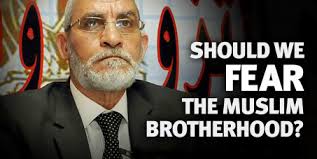
The Donkey, The Camel And The Facebook Scam: How The Muslim Brotherhood Conquered Egypt And Conned The World

By Raymond Stock


Closing a celebration on June 30, 2012 for his swearing-in as what the world hailed as Egypt’s first civilian, freely elected president, Mohammed Mursi declared, “We will not look back, nor will we look beneath our feet, but we will look forward always.” In that simple, seemingly pedestrian statement he summed up the strategy that has brought the Society of the Muslim Brothers from humble but ambitious beginnings in Ismailiya in 1928 to political (if not yet physical) dominance in the largest Arab nation, and most other parts of the region, today.

Mursi’s unexceptional imprecation at Cairo University not “to look beneath our feet” has ages of folk wisdom embedded within it. When Egyptians want to say that a leader is foolish or uncertain of where he is headed, they compare him to a donkey—a stubborn but timorous beast that hesitates and looks down at its feet as it walks. When a leader is wise and farsighted, they liken him to a camel—a smart, confident creature that gazes steadily at the horizon as it moves imperturbably toward its goal.

For this reason, President Hosni Mubarak—whose nearly thirty years of rule were marked in many ways (though not in all ways) by caution mixed with obstinance and a fear of rapid action in any direction--was ridiculed on the street with countless jokes like the following:

King Fahd of Saudi Arabia, President (Hafez) al-Assad of Syria, and President Mubarak die and are called to meet their Maker. Our Lord is angry and tells them, “Look, I didn’t like the way you three behaved down there before, so I’m sending you back to Earth in the shape of animals.”

As the three dead despots gape at each other in dread, God continues, “You, Fahd, because your name means “cheetah,” I’m sending you as a cheetah. And you, Assad, because your name means “lion,” you’re going as a lion.” Then He pauses. “But you, Mubarak—you’re a donkey!”
Stunned, Mubarak looks up at the Almighty and whines, “Again?”

All the more ironic, then, that in the case of Mubarak’s abrupt fall from power, he arguably was not the real donkey of the story. The then eighty-two year old Mubarak, in fact, though ill and out-of-touch with most daily affairs, accurately foresaw that the moment he left office—especially without arrangements to assure a smooth and stable transition that would increase the chances of preserving a more secular system—his regime would be followed by his (and our) own worst enemies: the Islamists.

Rather than a doddering tyrant stubbornly clinging to power, as so many have portrayed him, Mubarak, with all his grievous faults, and though it came too late to save him, at that moment was really like the camel, seeing clearly what lay ahead of him and his troubled country. If he hesitated, it was not from stupidity, but because he plainly perceived the abyss before him. Clearly he was not afraid for himself and his family, for he, his wife and sons trustingly remained in Egypt after President Obama made it clear to the generals on the evening of February 10, 2011 that he wanted a speedier move to a new regime, and Mubarak thus stepped down the next evening. Meanwhile, the so-called Facebook revolutionaries (whose leaders, we will soon see, were apparently not quite what most people thought they were), Western media and governments—all played a counterintuitive role. Indeed, all of these widely hailed forces of goodness and reason became the convenient vehicle on which Mohammed Mursi, the MB, and their more openly militant allies, the Salafis, have now ridden to power.

How the Muslim Brotherhood, by keeping its eyes fixed on the distant prize of state power for more than eighty years, fooled almost everyone into seeing this situation in the obverse of the truth is the real story of the “January 25th Revolution.” It is also the real joke here—probably the best ever composed in the five thousand year history of a country justly famed for its biting—if often bittersweet—political humor. And maybe even in the history of revolutions, too.

THE FACEBOOK SCAM
From the beginning of what came to be known as the January 25th Revolution, we’ve all heard that it was launched not by Islamists like the MB, but by a group of liberal social media-savvy activists, mainly of university age. For them, the immediate catalyst was allegedly the beating death of a young dissident named Khaled Said by police in an Alexandria internet café in 2010. This led to a protest movement, ostensibly to oppose police brutality, which was used to set a date to start demonstrations whose object was to bring down the Mubarak regime, on National Police Day—Tuesday, January 25, 2011. The organizers were drawn from a national anti-Mubarak coalition that had grown out of a strike of textile workers in the Delta town of al-Mahalla al-Kubra, which led to a massively suppressed (and failed) attempt at a national general strike on April 6, 2009.

The leaders and passionate members of that group, dubbed the April 6 Movement, were themselves largely drawn from an array of anti-Mubarak and anti-Israeli forces (in Egyptian politics, they are one and the same) galvanized by the bloody start of the Second Palestinian Intifada in the fall of 2000. April 6 was also in a tacit alliance with the Muslim Brotherhood, partially outlawed under Mubarak, hundreds of whose members languished in prison. April 6 strove to free the MB detainees, while pushing for a goal on which the two groups were formally agreed: cancellation of the Egypt-Israeli peace treaty signed by President Anwar al-Sadat in 1979 with then-Israeli Prime Minister Menachem Begin, under the auspices of U.S. President Jimmy Carter. Even more than police brutality and the arbitrary arrests and torture inflicted on dissidents through the hated Emergency Law (first imposed by Gamal Abdel-Nasser, then prolonged and expanded by both Sadat and Mubarak), no other issue so united the Islamists and the generally secular Egyptian Left than their mutual virulent rejection of peace with—and the existence of--the Jewish State.

Ironically, as part of its efforts to appease its domestic critics—and because the cultural elite had grown up with hatred of Israel (and, increasingly, hatred and fear of Jews) since the days of Nasser—the Mubarak-controlled media as well as the opposition deliberately incited an air of hysteria against what it called the mass murder of children by the malevolent Zionists in the Intifada. (This peaked, of course, during the global uproar over the Muhammad al-Durra affair early in the Palestinian uprising, which in February 2012 the French Supreme Court in effect ruled a hoax meant to frame Israel for the boy’s death.) Supposed experts on Judaism delivered anti-Semitic rants on television, newspapers published letters by readers calling for the completion of Hitler’s extermination of the Jews, and a general portrayal of Israel and the Jews as the epitome of evil helped found and motivate the very movement that would eventually bring Mubarak down, more than a decade later. Despite his close security cooperation with Israel—particularly against Hamas and Iranian infiltration of Gaza and the Sinai—(which he downplayed), and his sometimes helpful role in the ever-troubled peace process (of which he boasted), to divert attention at home he used Israel as a scapegoat. Hence he didn’t mind when his wife’s reputed fashion consultant, an abstract painter whom he’d made Culture Minister named Farouk Hosni, forbade Egyptian artists and intellectuals to have any contact with any Israelis (including peace activists), a practice mirrored in the professional syndicates and on university campuses around the country, including even the faculty senate of the American University in Cairo.

However dishonest, self-contradictory and ultimately self-defeating his public posture on the issue, Mubarak nonetheless bravely kept the peace with Israel for thirty years, breaking forever, it seemed, the endless ruinous cycle of repeated war and defeat. A key result was that in his final years—though there was little hope of keeping pace with Egypt’s booming population—the economy was growing at an impressive 5-6 percent per annum. But thanks to the arrogant ostentation of the nouveaux riches, the crass cronyism of Mubarak’s circle and the ignorance of the young about the lean years of war, few appeared impressed by this remarkable achievement. Hence the revolution was supposed to be about the economy, stupid. But journalists did not seem to notice that some of the signs in Tahrir depicted Mubarak with a Star of David on his forehead, or hear the rumors that he was a Zionist agent, about to flee to Israel. Thus, under the surface and in the back of many minds, the revolution was also about the Jews next door.

To this day in Egypt, Jews appear largely as malignant caricatures, in pictures and in words, in the press. Mein Kampf and The Protocols of the Elders of Zion, whose translation into Arabic were commissioned by the Mufti of Jerusalem, a Hitler protégé and close friend of Himmler and Eichmann based in Berlin during the war (from which he broadcast Nazi propaganda to the Muslim world) were—and still are—prominently displayed and much in demand in almost every bookstore and street kiosk in Cairo. Learned (and sometimes lurid)-looking tomes and “encyclopedias” of Judaism peddling half-baked and often offensive theories filled whole shelves in upscale bookshops. Like Mohammed Mursi, most people deny that Arabs were to blame for the 9/11 attacks (though many had cheered them on the day itself). They insist that it had it had to be an inside job, aided if not planned by Mossad. Then they will tell you, “But if America doesn’t watch out, we’ll do it again.” Dwelling in a sea of lies (much of the Egyptian press is what American supermarket tabloids would look like if directed by Joseph Goebbels and Ayman al-Zawahiri), with few trustworthy sources of information, coupled with growing access to the open data (and disinformation) highway of the Internet, the conspiracy theory reigns supreme. There is a virtually all-enveloping belief that Israel and America lurk behind every problem in Egypt and the Middle East. Yet the real tragedy is not that they believe in conspiracies, because some of those do exist. The trouble is that they—and the Western media, governments and academe—typically don’t believe in the real ones, especially those hatched by the Islamists to exploit this seething mass of ignorance and discontent. This is an art form the MB has mastered through many years of patient struggle and organization from the bottom up, going back most of a century.

In this circus of misinformation and delusion, it is not surprising that one of the most basic common beliefs of how the revolution began should be founded on a falsely mythic separation of secular and Islamic forces. For among the leaders of the January 25th revolt were the two co-founders of the famous Facebook page that helped to launch it, Kullana Khaled Sa`id (We Are All Khaled Sa`id), named after the early social media martyr from Alexandria. On March 13, 2011, the Egyptian channel ON-TV, in a program called “Egypt in a Week” (Masr fi usbu`), hosted by Hassan Fouda and Amani al-Khayaat, featured as the evening’s main guest Essam El-Erian, one of the top members of both the Freedom and Justice Party (of which Mohammed Mursi is president), and of the Muslim Brotherhood that formed it.

During his conversation with al-Khayaat, El-Erian chose to reveal something that few knew about the initiators of the Egyptian revolution. He said that both of the men who ran “We are all Khaled Sa`id” on FB, Dubai-based Google executive Wael Ghonim, and an Alexandrian activist, Abdel-Rahman Mansour, had links to the MB.

El-Erian boasted that Mansour’s “political loyalty” then belonged to his organization. (He specifically used the term “al-Ikhwan al-Muslimin”—the Muslim Brotherhood—and not the Freedom and Justice Party, though at any rate there is no daylight between the two.) Even more startlingly, he said of Ghonim, who had seized the world’s imagination with his charismatic and emotional TV appearances, his hip but shy demeanor, and his brave defiance of the regime: “He joined us for a while, as a muhibb,” but had since left the group.

According to Eric Trager, who has done state-of-the-art field studies of the organization before and during the uprising, in a piece on the MB’s organization and recruitment methods in Foreign Affairs:
When an aspirant is first admitted into the Muslim Brotherhood, he becomes a muhib, “lover” or “follower.” During this period, which typically lasts six months but can last as long as four years, the muhib enters a local usra, or “family,” a regular meeting group where his piety and ideology are closely monitored. “At the muhib level, they try to educate you and improve your morals,” Islam Lotfy, 33, another leading Muslim Brotherhood youth activist, told me. “If there is no improvement, they won’t take you.”

While there had been rumors of his connection to the group, this was the first and so far only known public confirmation of it—which attracted little public comment until now. Perhaps in response to a July 2, 2012 piece in Pajamas Media by Barry Rubin (in which he quotes this writer on the contents of El-Erian’s interview, above), on July 10 Ghonim issued an official statement confirming that he had become an MB muhibb when he was aged 17, and remained one “for a year and a half.” However, he did not reveal who was in his usra (family) or why he left, and denied that he now belongs to the Ikhwan. (As Trager states, one must spend at least five to eight years of closely supervised indoctrination, training and personal testing, to have become a full-fledged member of the organization.)

In any case, El-Erian’s disclosures utterly destroy the fiction that there was or is a clear separation between the “secular-liberal” youth cadre and the Islamists. Essentially, El-Erian is bragging none too subtly that the MB played a key role in launching the uprising.

Similarly, even the basic outline (and timeline) of how the MB got involved in the “Lotus Revolution”—an early, soon-discarded tag for what has morphed from widespread demonstrations to a fifteen-month (to date) deadly rumble—is almost entirely misunderstood. As Samuel Tadros, a veteran anti-Mubarak activist, outlined in Current Trends in Islamist Ideology, at first the MB assumed that the January 25 demonstrations would not garner much support—few such actions have in the past—and feared that they, as the regime’s bête noire, would pay the heaviest price when the government cracked down. But sensing this time would be different, on January 23 it agreed to verbally support the protests, simply as part of the broad Egyptian opposition—while cautiously refraining from organizing on their behalf. But as Tadros explains:

After being surprised by the rapid increase in the number of protestors (which, while still small, exceeded the size of usual demonstrations), the Brotherhood began to sense an opportunity. They calculated that the regime was much weaker than it was previously thought to be—a reality that became increasingly evident with the government's internet and mobile phone ban. The next demonstration, which was scheduled for Friday 28 [January], 2011, was an ideal setting for the Brotherhood to show its power. After Friday prayers, the movement began mobilizing its members, and, by using each mosque as a launching site for a demonstration, the Brotherhood was able to pour an enormous amount of people onto the streets. The results were spectacular. In a few hours the police force was being hammered. Contrary to earlier exaggerated estimations of the strength of the Egyptian police, the police force in Cairo was a mere 17,000 strong. Under siege from every corner, the moment of collapse took place when 99 police stations across the country were attacked. The only solution for the regime was to call in the army.

In other words, the MB endorsed the uprising before it began, not afterward—and clearly was in communication with its organizers then as well. And thereafter, rather than playing only a minor role, as most accounts claim, it was in fact the MB, more than any other group, that really brought the crowds into Tahrir and elsewhere. The Muslim Brotherhood was not a sheepish junior partner and Johnny-come-lately, as the media and experts portrayed it, but the most important player as of the second day of demonstrations, right through the end—and beyond.

What explains their enormous success? Partly it was another crucial blunder by Mubarak’s regime, when it tried to complete with the Islamists in religion. During the 1980s and ‘90s, alarmed by the appeal of the Islamist message, for the first time in modern Egypt, thanks to state policy, religion became the principle medium of political discourse. Due to this strategy of attempted cooptation, which may have bought it a certain amount of time, the formerly secular media as well as the mosques were dominated by state-approved clerics. Yet it was a game in the long term that the regime could only lose; due to its corruption, nobody believed in its piety, any more than in its sincere dislike of Israel (though the latter at least had a basis in fact). In neither of these areas could the government hope to match the MB. By sticking to founder Hasan al-Banna’s strategy of al-Da`wa, or building new civil and model state institutions through education, charity and political activism from the ground up on an Islamist basis, the Ikhwan successfully penetrated every major and minor public agency, from the student and professional unions to the vast bureaucracy (the oldest in the world), to the police and even the military. Rather than co-opting the MB, the MB had subverted the state’s own machinery, until the entire apparatus fell almost effortlessly into its hands last year.

That co-optation, at least to some degree, also included the Supreme Council of the Armed Forces (SCAF). This is the permanent group of senior military commanders that deposed Mubarak, in the end using the crowds on the streets as cover for their own desire to nix his plan to place his non-military son Gamal in the presidency after the elections then scheduled for September 2011. (Yet given their closeness to Mubarak—including, it is said, in his business affairs—they waited to take decisive action until pushed by President Obama.) According to my own sources, the majority of the officer corps, including the staff around SCAF’s senior member, Mubarak’s twenty-year defense minister, Field Marshall Mohammed Hussein Tantawi, lean toward or belong to the MB—though they were careful not to flaunt it under Mubarak. Hence it was no surprise that the SCAF quickly freed numerous Islamists held in prison, and permitted—or invited—the MB’s spiritual leader, Shaykh Yusuf al-Qaradawi, exiled to Qatar for the past forty years, to address the great celebration of the victorious revolution on the first Friday after Mubarak’s resignation. Al-Qaradawi—whose program on al-Jazeera has made him the most popular preacher in the Islamic world—has called on the Muslims to “chastise” the Jews, as Hitler had before them in the Holocaust—drew the largest crowd then seen in Tahrir Square. Rather than focusing on Egypt and its promised new democracy, he used the occasion to urge the believers to liberate Gaza and Jerusalem through jihad. Tellingly, Wael Ghonim—the darling of the international community as the face of the revolution—also tried to address the crowd, but was refused. (He later tweeted his admiration of Shaykh al-Qaradawi.) That day it became obvious who really ran the revolution—but again, those who should have caught let it pass or worse, denied it.

The MB’s reach into every aspect of life is due not only to the enormous amount of money donated by wealthy patrons in the Gulf and the profits of its far-flung business empire, but because, since antiquity, Egypt has always been an extremely pious country. Herodotus, the “Father of History,” thought it the most devoutly—if not fanatically—religious nation in the world, a trait frequently observed by countless travelers to the Nile Valley since. Thus when the brief flame of secular Arab nationalism died with its defeated hero, Gamal Abdel-Nasser, in 1970, his successor, Anwar al-Sadat, sought to revive the spirit of the Islamic faith to beat the Jewish state whose previous victories many Egyptians attributed to its belief in God (and their own defeats to their neglect of Islam). He also used the MB as shock troops against the Nasserist Left that continued to threaten his rule. In contrast, Mubarak, wounded in the hand as Sadat was murdered next to him in the reviewing stand on October 6, 1981, saw how the Islamist furies his boss had freed from the prisons where Nasser had thrown them had shown their gratitude by killing him as an apostate for making peace with Israel. Determined not to meet the same fate, he drove the Islamists back deep underground. When the MB remained the only functional opposition group by the end of his rule, critics said he had simply wiped out the secular alternatives in order to use the MB as a boogie man to retain Western aid. But in fact it meant that the Brotherhood was the one group that was so well-organized and widespread that he could never completely destroy it. Convinced that he was only trying to save himself, and that the MB had little chance of achieving an electoral majority, neither President Obama nor the protesters were willing to grant him any more time. None have yet admitted what this haste has wrought.

What that haste has wrought, in addition to an Islamist triumph—first of the MB and the even more blatantly militant Salafis in parliamentary elections in the fall of 2011, and the presidency last month—was needless chaos. Though street crime was rising in Mubarak’s final days, the collapse of the police after his fall has led to skyrocketing theft, murder and mayhem, and an alarming rise in attacks as well as threats against the Coptic Christian minority, many of whom have fled abroad in fear. Meanwhile, the ongoing disorder and frequent bloody demonstrations have caused a massive loss of tourism and foreign investment, and rapidly dwindling hard currency reserves. None of this (especially the rise of the Islamists, whom we were assured were both harmless and unpopular) was predicted when the revolt first began, and many continue to ignore or minimize it now. But eighteen months later, none of it is going away.

CAN DEMOCRACY MEAN CATASTROPHE?
Still some would ask, is Mursi’s victory really a catastrophe? Isn’t he, after all, some sort of solution? What should we fear from the birth of what’s billed as a vibrant new democracy on the banks of the Nile?

Maybe it’s this: On June 24, a pregnant young woman in the formerly cosmopolitan, now culturally conservative (under MB influence) Mediterranean town of Alexandria refuses to vote for Mursi. Enraged at her rebellion, her husband, a Mursi supporter, beats her into a coma. Hours later, she dies in hospital of her injuries. That afternoon, Mursi had been declared the winner of the election, promising to be president “for all Egyptians.” (Since then, supposedly unofficial morality police reportedly have killed two musicians in Sharqeya Province for the sin of, well, being musicians, as well as a young man out in Suez City with a woman whose relationship to him he failed to explain to their satisfaction.)

Or this: in an echo of Shaykh al-Qaradawi’s speech in Tahrir, at an MB-sponsored rally to launch Mursi’s presidential campaign in Cairo on May 7, 2012 a radical cleric, Shaykh Safwat Higazi, declares that Mursi will lead the reestablishment of the caliphate of “The United Arab States,” with Jerusalem as its capital. (Of course, after the brief reign of the Prophet Muhammad’s first successor, Abu Bakr, no such purely Arab caliphate has ever existed, and Jerusalem has never been the capital of any state but of both ancient and modern Israel.) Higazi also calls for jihad, and for Jews all over the world “to wake up” to face their coming defeat at the hands of millions of Muslim martyrs. Mursi and other top MB officials smile and clap approvingly at a table next to the podium. And less than a week after Mursi becomes president, the MB’s Supreme Guide, Mohamed Badie, told a crowd in Cairo that it was the duty of every Muslim to take part in the jihad against Israel, using the same language as al-Qa’ida—as pointed out by Raymond Ibrahim of The Middle East Forum. Yet an astounding number of commentators think it credible that Mursi’s pledge to uphold all of Egypt’s international agreements and commitments also refers to the Egypt-Israel treaty, though he fails to mention it by name.

And most probably, it also means this: In his first Friday speech in Tahrir Square after the election, Mursi pledges to a wildly cheering crowd that he will work to free Shaykh Omar Abdel-Rahman. Known as the “the Blind Sheikh,” Abdel-Rahman is now serving a life sentence in North Carolina for plotting to blow up the World Trade Center, the U.N. building, and numerous other major sites in New York in the 1900s. His fatwas justified the assassination of Mursi’s predecessor, President Anwar al-Sadat in 1981 and anti-Islamist activist Farag Foda in 1992, the sectarian civil war that culminated in the massacre of 58 foreign tourists in Luxor in 1997, and the attempted murder of Egyptian Nobel laureate in literature Naguib Mahfouz in 1994—not to mention the September 11, 2001 terror attacks in the U.S.

While there has been bi-partisan outrage in Congress at this pledge, so far the Administration’s response has been limp and self-contradictory. Secretary of State Hillary Clinton simply said that Abdel-Rahman’s release “is not happening,” while President Obama has said nothing. Meanwhile, Hani Abdel-Nour, a representative of the Gama`a al-Islamiya—the “Islamic Group” that targeted tourists at Abdel-Rahman’s command in the 1990s—parts of which have renounced violence (but still work toward an Islamist state by legal means)—was granted a visa come to Washington to press the case for the Blind Sheikh’s “humanitarian” release. (He is old and suffers from diabetes.) As a member of the GI, Abdel-Nour had previously been banned from entering the U.S. Yet if the Administration was sure from the start there would be no deal to free Abdel-Rahman, then why was he allowed into the U.S. in the first place.

This raises the question, is Mursi himself, as a major MB official, on a blacklist to visit America? Apparently, he is on the reverse sort of list at home. A July 5, 2012 report from the opposition newspaper, al-Dustur al-Asli says that he is still on a no-fly list in Egypt imposed during the Mubarak era on top leaders of the Muslim Brotherhood. “It goes without saying,” the still-unverified report concludes, “that with all the conferences and trips that that the new Egyptian president attends, that he will not be surprised before he boards the planes that he is banned from travel. Yet he is the first president to be handed his exalted position while he is officially forbidden to go abroad.” Whether or not he has ever been banned from leaving Egypt, his first foreign trip, on July 11, was to Saudi Arabia, whose King Abdullah had tried to prevent his rise, while other Saudis have subsidized the MB.

And regardless of any past blacklisting in the U.S., on July 8, came a report that the American head of state has invited his Egyptian counterpart to meet him at summer’s end. According to The Jerusalem Post, quoting Mursi’s aide Yasser Ali, after a visit to Mursi in Cairo by William Burns, U.S. Deputy Secretary of State, “President Obama extended an invitation to President Mursi to visit the United States when he attends the UN General Assembly in September.”

Once again, a major irony, Mursi is the successor to the man who had thrown him and his fellow MB leaders into prison when the demonstrations began in January 2011—America’s former (and hastily dumped) “friend,” now sentenced to life in prison himself for having failed to stop the killing of demonstrators against his rule. His deposed predecessor, though he liked to remind his countrymen of how he warned this or that American president against various misadventures, never plotted to destroy our country or way of life. Yet that is just what the Muslim Brotherhood is sworn to do, and has been from its origins. And it sees the “Arab Spring”—which it played a much greater role in organizing as well as inspiring than is commonly believed—as its best opportunity to work toward that lofty purpose to date.

In October 2010, an Egyptian veterinarian and high MB official named Mohammed Badie, declared that the Muslim Brotherhood is committed to the global jihad against America and Israel, and—for the first time—to revolution against the Mubarak regime. (Previously it always claimed to work for change peacefully, within the system.) Six months later, Badie became the MB’s Murshid, or Supreme Guide, the authoritative leader of the largest and best organized opposition group in Egypt and the Middle East as a whole. Yet at the time, Badie’s statement—which he made in Arabic—went almost entirely unremarked in the foreign media. Only one person—Tel Aviv based Barry Rubin—noted it in English when he made it. Yet it would have tremendous importance when the MB had to choose whether or not to join the mass protests against Mubarak just three months later.

But already The Egypt Independent says that he is hedging on his promise to name a cabinet representative of all the parties that took part in the race. There have been repeated reports that he will name Mohammed ElBaradei, former chief of the International Atomic Energy Agency (and an erstwhile MB ally) as prime minister to unify all factions behind, him, but ElBaradei has denied being approached on this. (People close to him have suggested that the president is claiming to have asked him to serve, so that they can claim they gave him a chance but he refused—but this cannot be confirmed.) There have even been reports that novelist and political columnist Alaa al-Aswani, an outspoken secularist who, like many who feared a return of the ancien regime with Ahmed Shafiq (Mubarak’s last prime minister, beaten by the MB candidate in the run-off), has become a major booster for Mursi, will be appointed as culture minister. (After al-Aswani rushed to greet Mursi personally at Mubarak’s old office, many of his former admirers accused him of selling out to the very Islamists he had previously hammered in his columns.) All this remains speculation for now.

And there is every reason to expect he will try to portray himself as the right man for all reasons. There is an almost universal desire to see him as the leader who will fulfill the dream of the January 25th Revolution—to bring liberal democracy to Egypt in the wake of the overthrow of President Hosni Mubarak.

Each has their own impulse to read Mursi’s “destiny on his forehead,” to paraphrase another Egyptian expression. Even those worried that he doesn’t mean all the nice things he says console themselves that if goes too far in any direction, the assumedly jealous and insecure generals of the SCAF will hold him back. Others fear that the nascent democracy will be nixed by the nervous generals, oblivious to the dangers of an extremist government in control of the largest Arab nation, which straddles the Suez Canal. Meanwhile, a Muslim Brotherhood-dominated government has been elected in Tunisia (where media censorship and outrages by Salafis are now common), another seems set to succeed the regime of Bashar al-Assad in Syria (should it finally fall) as well, while an MB offshoot has won the recent legislative elections in traditionally moderate and stable Morocco. (Only in Libya, where the Ikhwan was expected to win the recent elections for parliament, have they experienced a notable setback—but even there they lost to a coalition led by a “moderate” Islamist.)

For those who have hope that Mursi will live up to his liberal promises, reality offers reason only to despair. For Mursi as candidate, and the MB as his organization, have each repeatedly lied about they stand for, and what they want to do. Their record of dishonesty is so indisputable that it shocks the ear to hear the voices that still trust them.

After Mubarak’s fall, the MB, assuring the public that it did not seek state power, announced it that would seek only one third of the seats in the new parliament. Then that changed to half the seats, and finally to all of them. And from the start, the MB foreswore running a candidate for president—then put forward Kheirat al-Shater, a charismatic, extremely wealthy businessman in its top leadership, to succeed Mubarak. But with al-Shater ruled out on a legal technicality, the stodgy, uninspiring Mursi—who for many years had been the hardline ideological enforcer inside the MB—stepped in. In the first round, he spoke out vehemently for the traditional MB program, telling one crowd that “the Qur’an is our constitution,” that the law of the land must be shari`a, and that to die in jihad for the sake of God was the highest aspiration. He opposed allowing either a Christian or a woman to become president, for shari`a would not let either rule over Muslims. But when he took a quarter of the votes (narrowly edging out Shafiq and a so-called “moderate” Islamist competitor, Ahmed Aboul-Futouh, whom he had drummed out of the MB), he dropped this harsh rhetoric in the second round. And so he beat Shafiq—the genuinely moderate, highly-successful manager of the air transportation sector that briefly had been Mubarak’s last prime minister during the eighteen-day uprising.

On June 14, just two days before the second round, the Supreme Constitutional Court, ruled that one third of the seats in the MB-and-Salafi dominated parliament had been illegally contested, and that parliament should be dissolved. At the time, to again reassure voters that he was a man of law and did not seek a confrontation with the military, Mursi said that he accepted the decision—while the MB officially said it would not. When the SCAF formerly ordered the dissolution of parliament and assumed its legislative powers, the issue went to the Higher Administrative Court for a ruling that Mursi hoped would allow a quick special election to fill the one-third of illegitimate seats, while preserving the Islamist majority of the original body.

But then on Sunday, July 8, Mursi took virtually everyone by surprise by officially recalling the entire old parliament, perhaps as early as the next day, where he said it would meet until a new body could be elected in two months time. Evidently he would rather not wait for a ruling that might not have delivered what he wanted, and did not worry that the SCAF might crack down heavily for violating the order of the highest court in the land and challenging its own authority so brazenly. Perhaps, as they seem to have maintained during the entire transition until the Court’s fateful finding against parliament, they even have worked out a deal with the military. For example, they may have agreed not to pursue court cases against the SCAF officials with tight ties to Mubarak, and to drop their demand that the military’s budget come under parliamentary oversight for the first time in decades, which have been the main issues between them during the transition. Or perhaps Mursi was emboldened by the emphatic letter of support for the economy of the new democratic Egypt that he received earlier that very day from President Obama during the visit by William Burns, which also allegedly extended his invitation to the U.S. With such legitimacy so rapidly conferred by the world’s only superpower, Mursi may feel he now has the international strategic depth he needs to take on the generals even sooner than anticipated. We will shortly see if he judged that right, or acted prematurely.

Yet one fears that the military will be unwilling, no matter what the provocation, to depose a man they so recently accepted as the President of the Republic, and who (reluctantly) agreed to take the oath office in the Supreme Constitutional Court, whose legitimacy he hailed (now retracted, as it were), as they demanded. Of course, he also insisted upon taking it before his wildly cheering followers in Tahrir a day earlier, and to the cashiered parliamentarians an hour or two later—standing at the same podium from which Obama had addressed the Muslim world—an undefined new nation that has had no prior existence in American diplomatic relations. It was there, when Obama broke protocol and insulted Mubarak by asking for the MB leadership to attend, that one could say the January 25th Revolution really began. (Still others would trace to it George W. Bush’s Freedom Agenda and the 2003 war in Iraq—when the subsequent drive for democracy in Egypt first raised real hope for a needed change.)

Though renouncing violence at home, the MB has endorsed terrorism abroad, and has been preparing for possible civil war throughout its existence. The SCAF may have more military power, but Mursi evidently believes he has the White House and perhaps the Kingdom of Saudi Arabia—which initially opposed him—behind him. The Ikhwan’s praise and defense of al-Qa’ida and its mourning for Osama bin Laden are obviously more worrying to Riyadh than to Washington. But they both seem to think—or hope—that they can somehow guide or even buy the MB. While Mursi's move to recall parliament has split public opinion, this may matter little if he is able to use his swelling strategic depth abroad to isolate the generals internationally. The U.S. Administration could justify backing him as offering aid to democracy against military dictatorship, but if Mursi wins he will in fact be proving that there is no law in Egypt—and there can be democracy without the rule of law. Moreover, it may well be done against the will of the majority: both the MB and the Islamists lost nearly half their total popular support after their bizarre performance in parliament before it was dissolved. Even the legal body to which the (illegally) reconvened parliament voted to refer it in its brief session on July 10—the Court of Cassation—has no authority over the Supreme Constitutional Court. (The SCAF only carried out the latter’s order—and though the Court’s members were appointed by Mubarak, they have always been seen as notably independent.) The Court of Cassation, however, does have a record of supporting at least one important pro-Islamist decision—when, in 1996, it upheld a lower court’s finding that Prof. Nasr Hamid Abu Zeid of Cairo University was an apostate for his post-modernist literary analysis of the Qur'an. (Thus ordered to divorce his wife, Ibtihal Yunis--a fellow Cairo University professor—on the grounds that a Muslim woman cannot be married to an unbeliever, the couple fled to Europe for their lives.) Of course, the army can still win this round, but unless President Obama changes his apparent position in favor of Mursi and the MB, they are apt to lose the struggle in the end.

Though the Brotherhood announced the cancellation of Mursi’s membership immediately after this election, given his lifetime investment in their cause and his (and their) proven economy with the truth, there is little doubt that the new president will remain loyal to its principles and its goals. Some have argued that he now has the chance to build an independent base as a pragmatic, centrist politician. They believe that the experience of working with so many different factions, from secularists to Salafis, in the presidency will change him. But MB itself has always sought to build coalitions on the Left and the Right. For much of the 1980s and ‘90s it was in formal alliance with the Wafd, its traditional enemies before the 1952 Free Officers’ coup that brought Gamal Abdel-Nasser to power, which they tried to revive last year. They were, as we have seen, also in a common front with the April 6 Movement against Mubarak—then campaigned for the Constitutional amendments drafted by an Islamist-dominated body of experts appointed by the SCAF in another early sign of where their ideological commitments lie, which the liberals opposed. And, of course, they won in a landslide. And the MB continued to abstain from anti-SCAF demonstrations that their erstwhile secular allies launched over the last year and a half.

All these lessons notwithstanding, many of the most militantly anti-Islamist liberals sided with the Brotherhood against Shafiq in the presidential race, and are now backing Mursi against the generals. Wael Ghonim, who in November 2011 promised there was “nothing to fear” from an Islamist state, said, unsurprisingly, that he voted for Mursi, tweeting after he won, “The revolution continues.” And the April 6 Movement continues to boost him. With the exception of some liberals who are appalled at Mursi’s unconstitutional defiance of the judiciary, neither they nor the White House have learned from what happened to the secular opposition in Iran, when it formed an alliance with the clerics against the Shah in 1978 and ’79. That revolution likewise won the early blessing of a U.S. administration, which hailed it as moderate and its leader, the Ayotollah Ruhollah Khomeini, as a pragmatic nationalist, continuing to offer it aid and cooperation. Within a year the liberals were all either dead, in prison or in exile, and the “moderate” Islamists had seized the American embassy in Tehran.

THE DONKEY’S RETURN
The stubborn failure to heed the actual declarations by the Islamists of what they want to do—to impose shari`a, wage jihad against the West and Muslims they hold to be lax, restore the Caliphate and eventually dominate the earth—brings to mind a story about the character Goha, the perpetual “wise fool” of Middle Eastern folklore. Sometimes he is more foolish than wise:

One day Goha borrows his neighbors' donkey to do his errands—during which he grows fond of the useful beast, and decides to keep it for himself. When he comes home that night, he sneaks the donkey into his barn. He then tells the neighbors that it had run away from him during the day, and could not be found. After much wailing and lamenting, the grief-stricken neighbors finally retire for the night, and Goha goes to his own bed as well.

Suddenly, in the middle of the night, the neighbors are roused from sleep by the sound of their donkey braying in Goha's barn. Crying with relief, they rush to Goha's house and pound excitedly at his door.

“Goha! Wake up!” they shout with joy. “Our precious donkey has returned!”

“Go back to bed!” Goha tells them. “There’s no donkey here!” Yet the neighbors insist, “But we can hear him, Goha! Come, let's look in your barn!”

“What?” Goha answers. “You mean you believe the donkey—and you don't believe me?”

On January 30, 1933, after a decade of Nazi electoral struggle, Reich President Paul von Hindenburg appointed Adolf Hitler, a vicious ideologue with a gift for insincere diplomacy, as Chancellor of Germany in a coalition cabinet of “national concentration.” “Just like a fairy tale,” Goebbels, soon to be his propaganda minister, wrote in his diary. As noted by Ian Kershaw in Hitler: A Biography, few would have believed it possible but a year earlier. Hitler quickly set out to eliminate his Leftist enemies, his Rightist rivals, and—with slowly gathering lethality—the Jews. So skillfully did he play the moderate that, when he unleashed his first orgy of violence that February he was able to blame undisciplined underlings for the bloodshed. That is what he continued to do right through Reichskristallnacht in November 1938, the first great pogrom against Germany’s Jews, and even in the Holocaust, which some historians blame more on his subordinates than on the Fuehrer himself. Yet he had made his intentions clear in numerous speeches over the years, and even in the pages of Mein Kampf as well. Tragically, few wished to listen.

The Muslim Brotherhood, with an implacably anti-Western, anti-secular, anti-Christian, anti-Semitic, anti-female, Muslim-supremacist ideology, plus organization and tactics directly influenced by the Nazis—who armed and financed it in the 1940s—has waited even longer for this moment. The MB seems finally in a position to take the prize of total state power, toward which it has been plodding through the sands of the political wilderness since 1928, its eyes always fixed on that longed-for horizon. Yet most of the world still sees its leaders not as they are, but as they wish them to be: moderate, liberal, interested more in economic well-being than holy war, at least for the sake of being reelected next time. But we have no evidence at all at that they have changed so far, no reason to think that they will change later, nor that there will be a chance to vote them out in future. The MB, like Hamas, its Palestinian branch (which won elections in 2006, then grabbed power in a coup in 2007, and has not let go since), is not apt to yield control peacefully. Like Hamas, they deserve not to be bribed with aid that they will only use against us, but to be offered help only if they loudly and repeatedly renounce—in Arabic, the only language that counts to their constituents—their most deep-seated beliefs and objectives. Yet even that would likely prove illusory: bitter experience with Hamas, Hezbollah, the Taliban and other Islamist movements, shows that their ideology is far more important to them than their people’s security and prosperity. Still, from officials, experts and pundits who should know better, despite some pro forma appeals for vigilance, we are mostly asked just to wait—until it could be too late.

We now have a choice: to hear the braying of Goha’s borrowed donkey—or to be the donkey on which the MB and its fellow travelers ride to ultimate power in Egypt, and the Middle East (which their dreams stretch far beyond, past our own horizon). With Mohammed Mursi as president of our largest Arab ally, there may remain little time left for us to decide.

-This commentary was published by Foreign Policy Research Institute in July 2012
-Raymond Stock, former Visiting Assistant Professor of Arabic and Middle East Studies at Drew University (2010-11), and Guggenheim Fellow (2007), lived in Cairo for 20 years (1990-2010). He was denied entry and deported by the regime of former President Hosni Mubarak on a return visit in December 2010, apparently due to his 2009 article criticizing then-Culture Minister Farouk Hosni’s bid to head UNESCO in Foreign Policy Magazine. With a Ph.D. in Near Eastern Languages and Civilizations from the University of Pennsylvania (2008), he has published widely on the Middle East in such periodicals as The Financial Times, International Herald Tribune, and the Middle East Quarterly. His translations from Arabic fiction have appeared in Harper’s Magazine, London Magazine, and other venues. He has further translated seven books by Egyptian Nobel laureate in literature Naguib Mahfouz (1911–2006), whose biography he is writing for Farrar, Straus & Giroux in New York. His translation of Mahfouz’s novel Before the Throne appeared through Anchor Books (Random House) in paperback in July 2012.

Dark Soldiers Of The New Order

The Soviet Union's spies haven't disappeared, they're just wearing new clothes. An exclusive excerpt from Edward Lucas's new book, Deception.


BY EDWARD LUCAS


The cold breath of the Communist secret police state blighted countless lives behind the Iron Curtain. But it also touched my own childhood in 1970s Oxford. Olgica, our Yugoslav lodger, had an exciting secret: Uncle Dušan. The poet Matthew Arnold described Oxford as "home of lost causes, and forsaken beliefs, and unpopular names, and impossible loyalties." In Dušan's case, this was partly right: his surname (like those of most east European émigrés) if not exactly unpopular, was certainly baffling to British eyes and ears. I recall him as a glum, shadowy figure, with plenty to be glum about. His cause seemed irretrievably lost. He was a hero in his own twilight world, but in post-war Yugoslavia, the authorities denounced anti-communists like him as criminals and traitors. Many perished in mass graves or in the torture cells of the secret police. Dušan was one of the lucky ones. He had escaped to Britain, to a humble job as a mechanic and life in Crotch Crescent, a drab street in Oxford's outskirts -- a sad comedown for someone who in pre-war Yugoslavia had been a high-flying young civil servant.

But in one respect, Dušan did not fit Arnold's dictum. Despite his disappointments, he had not forsaken his beliefs: communism was evil and the people who ruled his homeland were usurpers. In fact, Yugoslavia's independent-minded communists had become mild by comparison with the much tougher regimes of the Soviet bloc. But they were still ruthless in their treatment of dissenters, particularly those with contacts with anti-communists abroad. Olgica's family maintained, at great risk, secret links with relatives abroad, flatly denying all knowledge of them under interrogation from the secret police. In Oxford, she visited her uncle each weekend. Had the authorities at home known that she was hobnobbing with a dangerous anti-communist émigré, her father's glittering medical career (which had even brought him, briefly, to Oxford) would end; her own future (she had stayed on to finish her schooling) would be jeopardized too. It could even be dangerous for her to return home, leaving her stranded in Britain as a teenage refugee.

My own childish preoccupations blundered into this grown-up world. Even before Olgica's arrival, my boyhood obsession had been Eastern Europe. I would spend hours looking at dusty atlases, and reading about the vanished kingdoms and republics of the pre-communist era, with their long-forgotten politicians, quaint postage stamps and exotic languages. Behind the Iron Curtain, they seemed as distant and unreal as Atlantis. In my early teens, I needed an example of communist propaganda for a school history project and decided to write to the Yugoslav embassy in London, asking for an official statement of how their government saw their defeated royalist rivals. That would, I thought, sit nicely alongside the other exhibits I had already assembled, including a passage from Winston Churchill's history of the war, a poignant account of life in Cambridge by the exiled Yugoslav boy-king Peter, and a sizzling history of a British military mission to his doomed soldiers.

I proudly announced my plan. To my consternation, Olgica turned white. My mother took me aside: didn't I understand that the Yugoslav embassy in London would at once hand over this letter to the secret police? (With its sinister-sounding acronym UDBA, the Uprava državne bezbednosti or Department of State Security was the bane of the regime's critics at home and abroad). It would be obvious that my childish inquiry came from the same Oxford address where the daughter of a top Yugoslav pediatrician was living while completing her A-levels. It was bad enough that the UDBA would instantly suspect her of propagandizing about the royalist past -- a crime in Yugoslavia. Worse, it would start checking up on her family history and might then discover her carefully concealed ties to the notorious inhabitant of Crotch Crescent. Her life could unravel in an instant.

This trivial episode taught me important lessons -- albeit in politics not history. First, that the power of the communist state was based on the relentless, intrusive, bureaucratic reach of the security and intelligence services, and their capacity to ruin the lives of those who displeased them. Secondly, that these agencies' reach extended far beyond their own grim dominions -- even to the seemingly safe and secure world of an English university town. The extraordinary idea that my actions could put me under scrutiny by hostile foreign officials sparked an interest that has gripped me for decades. In the years that followed I devoured spy literature, from defectors' memoirs to John le Carré's novels. I tracked down retired spies and quizzed them. I also kept a beady eye on contemporaries who were offered jobs by MI6, as Britain's Secret Intelligence Service, SIS, is colloquially known.

Even without knowing much about the intelligence world I was struck by the clumsiness of those approaches: on the same day a crop of identical government-issue buff envelopes would arrive in student pigeonholes. Some recipients ignored the strictures to keep silent. A friend even framed the letter and put it in his lavatory, so his friends could appreciate the unconvincing letterhead and the strangulated offer: "From time to time opportunities arise in government service overseas of a specialized and confidential nature." For those who did apply, the clumsy efforts of the vetting officers (also accompanied by dire warnings about secrecy) were similarly corrosive of confidence in the spooks' worldview. Did it really matter in the struggle against the Soviet empire, I wondered, if Tom had gay flings, if Dick smoked dope or if Harriet had a boyfriend in the Socialist Workers' Party?

I reckoned I could do more good on the outside, and searched for any Eastern European cause that would accept my help. Inspired by my father, who smuggled books to fellow-philosophers persecuted in Czechoslovakia, I helped organize a student campaign to support Poland's Solidarity movement, crushed by martial law in December 1981. I waved placards outside embassies and wrote letters of protest on behalf of political prisoners. I studied unfashionable languages like Polish, and practiced them by befriending bitter old émigrés in the dusty clubs and offices of west London -- the world of le Carré's Estonian "Colonel" in Smiley's People. Like the spy author's fictional émigrés, these real-life ones had been sponsored by Britain's spooks, then betrayed and dumped.

I would occasionally take the number 12 bus down Westminster Bridge Road in Lambeth, past the headquarters of Britain's MI6. The location was in those days, supposedly, a closely guarded official secret, though the bus conductor was prone to announce jovially "Century House -- all spies alight here." I never went inside. But I would gaze up at the grubby concrete structure, with a petrol station incongruously sited in its forecourt. Was this really our answer to the fearsome Soviet Lubyanka in Moscow? The imposing classical façade of the KGB citadel (originally an insurance company headquarters) would have suited the grandest streets in central London. But the MI6 building looked liked a scruffy Soviet tower block.

Spies, whether paid agents, idealistic volunteers, or professional intelligence officers, were foot soldiers in the struggle between east and west that shaped the lives of all postwar generations, including mine. They intrigued me as a student, activist, and journalist -- first in London and later behind the Iron Curtain. In the 1980s I rubbed shoulders and clinked glasses with spooks on both sides, dodging their blandishments while swapping jokes, jibes, arguments, and ideas. For a brief while, the collapse of communism looked set to doom the whole business. Now that the Soviet Union was gone, and with it the danger of the Cold War turning hot, what was left to spy on? But the champagne corks that spooks popped in Britain and America in August 1991 were as premature as the gloom in Lubyanka as the statue of Felix Dzerzhinsky -- Lenin's secret-police chief -- was hauled away by a crane to the cheers of exuberant Muscovites. MI6, the CIA, and their partner services rejiggered their budgets and turned to new targets: rogue arms dealers, terrorists, gangsters, and cybercriminals. But new crime and old espionage soon proved to be overlapping phenomena; the crooks in the foreground were sometimes new, but in the background lurked, more often than not, the wily and ruthless figures of the old Soviet-bloc intelligence world.

They proved a good fit: dark partners in the new order. Far from being swept into the dustbin of history with the rubble of the old system, the communist-era spooks have evolved to match the new conditions. Some figures from the old days stayed undercover, gaining trusted roles in the new state structures. Others turned to business, where their foreign languages and knowledge of the outside world gave them a flying start in the new game. All across the former Soviet empire, assets of the Communist Party and its front organizations speedily melted away, often ending up in hands of the wily and well connected. So too did the operational funds of the KGB and its allied agencies. Estimates of the money squirreled away abroad during the collapse of the Soviet Union are in the tens of billions of dollars; a crop of still-unexplained suicides in the old system's dying days disposed of those in a position to blab. These caches of illicitly acquired cash were a financial springboard for the fleet-footed members of the old elite in their new business careers. In effect, they turned their power into wealth, and then back into power.

In Russia itself, Soviet-era spies, chief among them Vladimir Putin, a former KGB officer, now run the country. They are known as the Siloviki or "men of power." The old KGB was decapitated in 1991 amid the Soviet collapse, but not uprooted. Instead it renamed itself, just as so often in the past. (Under Vladimir Lenin it was the Cheka; later it became the OGPU, then the NKVD, and finally the KGB.) It is now split into two: the FSB, which has inherited the repressive domestic apparatus of the old system, and the SVR, which is the heir to the Soviet foreign intelligence service; alongside both works the separate GRU military intelligence agency.

Their most potent weapon in their deception is ordinariness. Just as Russian politicians and officials seem at first sight to hail from the same besuited and unremarkable caste as their counterparts in other industrialized countries, Russian spies appear neither glamorous nor sinister. They lead normal lives and work in normal jobs, moving effortlessly and inconspicuously among us. They are the kind of people you might meet at the school-gates, work alongside in an office, bump into on a business trip, or see mowing the lawn next door. Yet their real job is to penetrate our society, to influence it for their own ends, and to steal our secrets.

The best known of this new generation of Russian spies was Anna Chapman, the young redhead who was made a global superstar by her arrest and deportation in June 2010. She has become an intimate friend of Putin's, a prized asset of his political machine, a prominent figure in Russian finance, and a television celebrity. But her main talents in working abroad were not the highly honed skills of spy-school legend. She started her life here in the humdrum London suburb of Stoke Newington, to the outside eye just another hard-partying, quick-witted, young Russian woman with an English husband and an eye for the main chance, enjoying the safety and comfort of life in Britain. But her ordinariness was deceptive. She was well-placed to carry out her espionage assignments precisely because she seemed so inconspicuous. Her later transformation into a trophy superspy adds another dimension. It is proof of the skills of her imidzhmekeri (image-makers) and casts a revealing light on Russia itself.

The spy scandal that made Chapman famous was part of a larger picture. She was one of 10 people arrested in the United States in June 2010, all of whom lived unremarkable middle-class lives, seemingly far away from traditional espionage targets such as the Pentagon or State Department. She and another Russian lived there under their own names. Seven others had fraudulently obtained identities -- American, British, Canadian, Irish, and Uruguayan (the 10th was the latter's Peruvian spouse). One more suspect, a Russian called Pavel Kapustin, working under the alias of Christopher Metsos, was arrested in Cyprus but allowed to escape by the authorities there -- an episode, never satisfactorily explained, which still arouses fury in U.S. officialdom. (In a related case, a Russian who once worked at Microsoft was deported on immigration grounds in mid-July of that year).

Some people reacted with derision to the idea that Russia would send spies to suburbia, others with surprise. Both reactions were mistaken. This was not a new or foolish initiative by the Kremlin's spymasters, but the latest twist in an old and sinister one. Only two years previously in 2008, the case of Herman Simm had highlighted Russia's penetration of NATO. A portly Estonian ex-policeman who had become that country's top national-security official, he was exposed as a Russian agent after some able work by Western spycatchers. His case officer -- the career spy in charge of his activities -- was unmasked too. This was "Antonio": a Russian masquerading as a Portuguese businessman, under an elaborately constructed illegal identity. But the media furor over that case soon died down, leaving most people unaware of the effort that Russia, like the Soviet Union before it, still puts into deception, infiltration and subversion.

The international media frenzy surrounding Chapman trivialized espionage as a branch of show business. The mistake was easily made: pouting and haughty, the Russian firecracker could easily be a fictional character, not a real one. She would fit in neatly as the sultry sidekick to the arch-villain in a Bond movie. 007's relationship with "90-60-90" (Chapman's Russian nickname, which comes from the millimeters her shapely figure) would provide appropriately cheesy sexual tension. The lurid and seemingly pointless affair invited ridicule. New York magazine's headline was "Russian Spies Too Useless, Sexy to Prosecute." In London, the Guardian said confidently that "none of the 10 Russians had culled any secrets from their hideouts in US suburbia." A grand old man of Anglo-American journalism opined that the Russian illegals' operation was marked by "complete futility." As the detainees were swapped in Vienna for four people jailed in Russia for spying, David Cornwell, who under the pseudonym John le Carré so ably captured the dark intrigues of Cold War espionage, even suggested that out-of-control "rightists" in America's intelligence agencies were trying to jinx the improvement in Russian-American relations. He asked: "As we watch live in glorious Technicolor the greatest spy-swap of the twenty-first century, and hear in our memories the zither twanging out the Harry Lime theme, do the spies expect us to go scurrying back to our cold war shelters? Is that the cunning plan?"

With respect to Britain's greatest spy writer, and with rather less to other commentators, that is an oddly complacent approach. Spies need to seem as boring and inconspicuous as possible, to develop the capabilities that their real jobs require. If they are to be humble errand-runners, ferrying money, false documents, and other wherewithal to more glamorous operatives, then they need jobs that allow them to travel. George Smiley, le Carré's best-known character, spent the war years working undercover as an official (supposedly Swiss) of a Swedish shipping company -- the perfect background for someone needing a regular excuse to visit Hamburg or other German ports. For some the task is to gain jobs, hobbies, or lifestyles that give access to secret information. If the mission is identifying potential sources and the weaknesses that will enable their recruitment, they should be good networkers. If they are case officers, who recruit, direct, motivate, and check the agents, they need a lifestyle in which meeting a wide range of people arouses no suspicion. If they are moles, aiming to penetrate the other side's security or intelligence services, they need educational and career paths that will make them credible candidates for recruitment there.

Charles Crawford, a long-serving British diplomat in the region, explains it well on his blog. Espionage means finding out where highly sensitive and useful information is stored or circulated, then using the human or physical weaknesses in its protection to copy the information in an undetectable way. All this must be done without anyone noticing or suspecting, and repeated many times over. In such work invisibility is a prime advantage. Spycatchers can watch the every waking and sleeping hour of a diplomat suspected of spying. They can comb through visa applications to spot foreign visitors who may be more or less than they seem. They can put suspects on their own side under surveillance to see if they are having odd meetings with strange people. Such techniques may be effective in catching a spook disguised as a diplomat, or a careless traitor. But they have almost no chance of catching a properly trained and targeted "illegal" -- someone working under an acquired or stolen identity.

Russians do not trivialize or ridicule espionage. They take it rather seriously, both as a threat from abroad and as something that their country excels in. Admittedly, people everywhere find fictional spies glamorous. America has the amnesiac but indestructible Jason Bourne; Commander Bond's high jinks sprinkle stardust over the reputation of SIS. But real-life spies in Western countries have only modest privileges compared to their counterparts elsewhere. In Britain, for example, they retire at 55, earlier than the diplomatic colleagues whose cover they use. They have rather larger and more loosely scrutinized expense accounts than other officials, but on the whole enjoy the same lifestyle as any other middle-class professional.

The Soviet legacy, however, has left a distinctive aura around espionage in Russia. For officers of the KGB (such as Chapman's father, Vasily, or Putin and hundreds of thousands like them) life was markedly nicer than for fellow-inmates of the workers' paradise. Housed in the KGB's special accommodation, its officers had access to shops stocked with otherwise unavailable products. They holidayed at KGB resorts and were spared some of the system's petty restrictions on daily life. Those in the elite foreign-espionage division, the First Chief Directorate, and some colleagues in cryptography and counter-intelligence, could even be sent to work abroad -- perhaps even a posting to the fabled Western cornucopia that the class warriors both despised and envied.

Privileges aside, the KGB also enjoyed a mystique that still lingers over its successor organizations. People saw it (rather inaccurately) as efficient, knowledgeable and incorruptible. Its officers had a job that mattered, in an organization that worked, and were well rewarded for it. Few in the claustrophobic, ill-run, and bribe-plagued Soviet Union could boast as much. Like the space program and sporting heroes, the KGB also touched another emotional chord: patriotism. Though its ultimate loyalty was to the Communist Party, not the Soviet state (it described itself as the Party's "sword and shield") it basked in the reflected glory of the defeat of Nazi Germany. Rather as the Battle of Britain provides Britain's "finest hour," as the Resistance epitomizes France's national myth, and as the Normandy beaches exemplify America's commitment to the freedom of Europe, the Great Patriotic War (as the Second World War is known in Russia) was the central plank in the Soviet Union's self-image -- and plays the same role in Russian identity today.

For all the heroism displayed by Soviet soldiers in defeating the Nazi invaders, the real role of the secret police in those years was a despicable mix of war crimes against the foe, ruthless pacification of "liberated" territories and persecution of real or imagined waverers on its own side. Yet Soviet wartime history mostly comes across in a quite different light: on the television screens later adorned by Chapman's lightweight program on unsolved mysteries, viewers used to watch the exploits of the best-known Soviet fictional spy, Max Otto von Stirlitz (to give him his German cover name). His wartime mission was to penetrate the Nazi high command. Unlike Bond, Stirlitz shuns gadgets, guns, and girls. His weapon is his mind, fuelled not by communist ideology but a plangent patriotism. Though implausible, books and films featuring his exploits were compelling and sympathetic by the hackneyed standards of Soviet propaganda. They so captivated one tough teenager in the backstreets of 1970s Leningrad that he took the unusual step of walking into the city's KGB headquarters and volunteering his services. But the young Vladimir Putin was told that the organization did not accept walk-ins; he should get an education first and wait to be approached.

The Soviet Union is gone, but the links between Russia's spies today and their dark and bloody past are real enough. Of course, the old and new are not identical. Chapman's Soviet-era predecessors wore ill-fitting grey suits and sought the shadows. She likes leather cat suits and the spotlight. They served a totalitarian superpower. She serves post-Soviet Russia, a country that is undeniably capitalist and claims to be democratic. But a lasting connection is privilege. The dispensations enjoyed by Russia's spooks now mean that they lead a life apart, just as KGB officers did in the Soviet era. The difference is not in salary and access to consumer goods, but in the privilege of living above and outside the law. The results range from the trivial to the monstrous. An officer of the FSB can drive while drunk (and mow down pedestrians) with impunity. A flash of his ID badge will intimidate any lesser official; he can triumph in any private legal or commercial dispute; he can ignore planning regulations when he builds his house in the country.

Chapman does not just hit the old Soviet buttons in the Russian psyche. She tickles its modern neuroses too. Her brand is based not on the steely Puritanism of the wartime Soviet military but on the sleazy glitz of modern Russia. Her role was to spy not on the hated Nazis of long ago, but on a new bugbear: Western countries such as Britain and America, which the Russian regime sees as duplicitous, arrogant, and greedy. Though the elite likes to shop, bank, frolic, and school their children in and around London, many of its members despise Britain -- just as they resent what they see as American hegemony and the bossiness of the European Union.

This hostility stems in part from an inferiority complex: for all the West's ills, it provides a quality of life that is missing in Russia. This is despite what many Russians see as its baffling weakness and indolence. Another reason is that Russians object to what they see as the West's political interference -- for example, by sponsoring media freedom and pro-democracy causes, and sheltering fugitives, who claim to be persecuted for their political beliefs, but are seen (at least by the authorities in Moscow) as mere swindlers and terrorists.

Despite the Putin Kremlin's lip-service to the free-market, the business community has been a frequent target as well. Few cases highlight the FSB's corruption and brutality better than the torture and death in 2009 of Sergei Magnitsky, a Russian lawyer working for a British investor. He exposed a $230 million fraud by a criminal group led by the FSB and backed at the highest level in the regime. He paid for this discovery with his life; since his death, the authorities have tried to cover up his murder, and their fraud, with a mixture of bombast, lies, bullying, and evasion. The scandal exemplifies the overlap between gangsterdom and power in Russia, the abuse of the legal system, and the bravery of those Russians willing to defend the rule of law. The tentacles of FSB power stretch to the West too, not least because Russian officials have snooped on and intimidated Magnitsky's colleagues and defenders in London and elsewhere. The Magnitsky case shows that the ruling regime represents not just a tragedy for Russia: it is a direct threat to our own wellbeing and safety.

The passage of time and other priorities have eroded the expertise and institutional memory that in Cold War days helped spycatchers keep track of Soviet penetration attempts. Concerns for privacy have made vetting procedures flimsy. Officials can make money on the side, take lucrative jobs on retirement, take unexplained foreign trips, copy documents onto memory sticks from supposedly secure laptops, and carry an array of electronic gadgets that never come under scrutiny. A mistaken complacency has also surrounded the expansion of NATO to the ex-communist countries. It was right to enlarge the alliance (chiefly because of Russia's neo-imperialist saber-rattling) but intelligence and security services have grossly underestimated the Soviet-era shadow that still lies over the region. The liberation of 1989-1991 was intoxicating, but the effect was only skin-deep. Replacing the planned economy with free markets, state censorship with free media, and one-party rule with free elections were hugely important changes. But the transformation of the political and economic systems could not be matched by an instant change in the human beings that inhabit them. Millions of people in the region have grown up under communism and collaborated with it. The toxic legacy of secret police files, with the shabby compromises and sordid secrets they contain, still taints public life. It provides plenty of scope for blackmail of the guilty -- and the smearing of the innocent. Even those seen in the West as heroes, such as Poland's former president Lech Wa??sa, have come under a cloud of suspicion about past collaboration. Although not everything in the secret police files is true, and many true things are not in the files, the dirty secrets of the past, many of them spirited away to Russia in the dying days of the old regimes, create great possibilities for pressurizing anyone born before, roughly, 1970. In short, the collapse of communism left a series of human time-bombs all over the former empire -- with the Kremlin in charge of the remote controls.

Neither the Simm case, nor the exposure of Chapman and her colleagues, have properly woken up public opinion and officialdom to the fact that Russian spies' activities are not just a lingering spasm of old Soviet institutions, twitching like the tail of a dying dinosaur, but are part of a wider effort to penetrate and manipulate, which targets the weakest parts of our system: its open and trusting approach to outsiders and newcomers. Because this threat is underestimated or outright ignored, it is especially potent. It is part of a world, espionage, of which outsiders mostly know little and understand less.

The battle lines were more clearly drawn in the days of the Cold War, when the threat was of communist victory. The corrupt autocracy that rules Russia now is playing by capitalist rules -- and the threat is even more corrosive. However, Russia's new spies, like their Soviet predecessors, engage in the subversion, manipulation and penetration of the West. They also defend a regime that is tyrannical, criminal and even murderous. Some things never change.


-This article was published in Foreign Policy on 13/07/2012
-Edward Lucas is the international editor for the Economist